
What is managed talent and how does it optimize staffing

Many hiring managers believe managed talent is just another term for general talent management or HR workforce planning. This confusion leads teams to miss the strategic advantages that managed talent solutions offer for project staffing. Unlike broad HR strategies, managed talent focuses specifically on curated, project-aligned staffing with continuous oversight and AI-powered matching. This guide clarifies what managed talent truly means, how it differs from traditional approaches, and why it matters for US enterprises and startups seeking faster, more efficient project staffing.
Table of Contents
- Key takeaways
- Understanding managed talent: definition and core concepts
- Benefits of managed talent for project staffing and workforce agility
- Implementing managed talent: roadmaps and best practices
- Comparing managed talent to traditional staffing models
- Explore Fuerza’s managed talent solutions for your team
- Frequently asked questions
Key Takeaways
| Point | Details |
|---|---|
| Definition and scope | Managed talent is a strategic, project driven staffing approach using curated pools, AI powered matching, and ongoing management rather than broad HR practices. |
| Key differentiators | It targets project needs with pre vetted talent pools and continuous oversight instead of general talent management. |
| Time to productivity | Time to productivity is dramatically shortened as candidates are pre vetted and matched to exact project requirements. |
| Flexible models | Flexible engagement models support freelance, contract, or full time placements aligned with project scope and budget. |
Understanding managed talent: definition and core concepts
Managed talent represents a strategic approach to project staffing that goes far beyond traditional recruitment. It involves curated talent pools, AI-powered candidate matching, and continuous management throughout the engagement lifecycle. This model addresses the specific needs of hiring managers and product managers who require fast access to qualified professionals without sacrificing quality or cultural fit.
The distinction between managed talent solutions and general talent management is critical. While traditional talent management encompasses broad HR functions like employee development, succession planning, and performance reviews across an entire organization, managed talent zeroes in on project-specific staffing needs. The strategic talent acquisition handbook emphasizes avoiding confusion with broad HR strategies by focusing on targeted acquisition for immediate business needs.
For hiring managers, this focus translates to faster fills with better-matched candidates. Rather than posting jobs and sifting through hundreds of unqualified applications, you gain access to pre-vetted talent pools where every candidate has been assessed for technical skills, communication abilities, and cultural alignment. The AI-powered selection layer further refines matches based on your specific project requirements, team dynamics, and timeline constraints.
Managed talent operates on several core principles that differentiate it from traditional staffing:
- Pre-vetted talent pools reduce time spent on initial screening and technical assessments
- AI-powered matching algorithms align candidate skills and experience with project-specific requirements
- Ongoing management ensures smooth integration and addresses issues proactively throughout engagements
- Flexible engagement models support freelance, contract, and full-time placements based on project needs
- Continuous quality monitoring maintains high performance standards across all placements
This approach proves particularly valuable for startups and enterprises operating in competitive talent markets. Instead of competing for attention in crowded job boards, you access talent networks specifically cultivated for project work. The managed component means you’re not left alone after placement. Ongoing oversight helps resolve conflicts, manage performance expectations, and ensure projects stay on track.
Pro Tip: When evaluating managed talent providers, prioritize those offering transparent access to their vetting processes and quality metrics. Understanding how candidates are assessed helps you trust the matches and integrate new team members faster.
Benefits of managed talent for project staffing and workforce agility
The advantages of managed talent extend across multiple dimensions of workforce planning and project execution. For hiring managers facing tight deadlines and limited internal recruiting resources, these benefits directly impact project success rates and team productivity.

Time-to-productivity represents one of the most compelling advantages. Traditional hiring processes often stretch 6-8 weeks from job posting to start date, with additional ramp-up time before new hires contribute meaningfully. Managed talent compresses this timeline dramatically. The talent acquisition success metrics handbook notes that effective programs achieve time-to-productivity under 2 weeks, measuring from initial request to full contribution.
This acceleration stems from several factors. Pre-vetted candidates eliminate weeks of screening and technical interviews. AI-powered matching ensures the first candidates you review are genuinely qualified and interested. Managed onboarding processes help new team members integrate quickly, with clear expectations and support structures already in place. For product managers launching new initiatives or responding to market opportunities, this speed advantage can determine competitive success.
Retention improvements represent another significant benefit. When candidates are carefully matched to project requirements and team cultures, they’re more likely to stay engaged throughout the contract period and potentially transition to longer-term roles. The curated matching process considers not just technical skills but also working style preferences, communication patterns, and career goals. This holistic approach reduces mismatches that lead to early terminations or performance issues.
Workforce agility becomes achievable when you can scale teams up or down based on project demands. Traditional full-time hiring creates fixed costs and organizational complexity. Managed talent provides flexibility to bring in specialized expertise for specific initiatives without long-term commitments. You can staff a product launch with additional engineers for three months, then scale back as the project stabilizes. This adaptability proves essential for startups with fluctuating funding and enterprises navigating market uncertainties.
Key advantages for your hiring strategy include:
- Reduced hiring risk through pre-vetted talent pools and proven track records
- Lower recruitment costs by eliminating job board fees and reducing internal screening time
- Access to specialized skills not available in your local market through nearshore and onshore networks
- Faster project launches with immediate access to qualified professionals
- Improved budget predictability through transparent pricing and flexible engagement models
The optimized hiring timing approach ensures you can respond quickly to unexpected opportunities or challenges. When a key team member leaves mid-project or a new client engagement requires immediate staffing, managed talent providers can present qualified candidates within days rather than weeks.
Pro Tip: Establish clear success metrics before implementing managed talent programs. Track time-to-productivity, project completion rates, and cost per hire to quantify ROI and justify continued investment in these solutions.
Implementing managed talent: roadmaps and best practices
Successful managed talent implementation requires structured planning and ongoing refinement. Hiring managers and product managers need clear roadmaps that align talent acquisition with business priorities while maintaining flexibility for unexpected changes.
Start by creating a quarterly hiring roadmap that maps talent needs to specific projects and initiatives. This roadmap should identify required skills, engagement durations, and start dates for each role. Work with your finance team to establish budget allocations and with project managers to understand realistic timelines. The quarterly roadmap updates approach ensures your talent strategy stays aligned with shifting business priorities.
Your implementation roadmap should follow these steps:
- Assess current and projected talent gaps across active and planned projects
- Prioritize roles based on business impact and urgency of need
- Define clear success criteria for each position including technical requirements and cultural fit
- Establish budget parameters and approval processes for managed talent engagements
- Select managed talent providers aligned with your technical needs and geographic preferences
- Create onboarding templates that accelerate integration for contract and freelance team members
- Implement feedback loops to capture lessons learned and refine future placements
The following timeline and metrics framework helps structure your managed talent program:
| Milestone | Timeline | Key Performance Indicators |
|---|---|---|
| Initial roadmap creation | Week 1-2 | Identified roles, budget allocation, stakeholder alignment |
| Provider selection | Week 3-4 | Shortlist 3-5 providers, evaluate vetting processes, review pricing |
| First placements | Week 5-8 | Time from request to start date, candidate quality scores |
| 30-day review | Day 30 | Time-to-productivity, manager satisfaction, candidate engagement |
| Quarterly assessment | Day 90 | Retention rate, project completion success, cost per hire vs. budget |
| Roadmap refresh | Every 90 days | Updated talent needs, budget adjustments, process improvements |
Cross-functional collaboration proves essential for managed talent success. HR teams bring expertise in compliance, onboarding, and contractor management. Hiring managers understand technical requirements and team dynamics. Product managers provide context on project timelines and business priorities. Regular sync meetings between these groups ensure everyone stays aligned on talent needs and placement progress.
The managed talent roadmap timing approach emphasizes flexibility within structure. While quarterly roadmaps provide direction, you need mechanisms to adjust quickly when priorities shift. Establish clear escalation paths for urgent needs and empower hiring managers to initiate placements within approved budget parameters.
Pro Tip: Create standardized intake forms that capture all essential information for managed talent requests. Include technical requirements, team structure, project context, timeline constraints, and cultural fit preferences. This standardization accelerates provider response times and improves match quality.
Monitor your managed talent implementation progress through regular reviews. Monthly check-ins with active contractors help identify issues early. Quarterly program reviews assess overall effectiveness and identify opportunities for process improvements. Annual strategic planning sessions align managed talent strategies with long-term business objectives.
Comparing managed talent to traditional staffing models
Understanding how managed talent differs from traditional staffing approaches helps you make informed decisions about which model best serves your organization’s needs. Each approach offers distinct advantages and tradeoffs that matter differently depending on your project timelines, budget constraints, and internal capabilities.
Traditional staffing typically involves either internal recruitment teams posting jobs and managing the entire hiring process, or working with external recruiters on a contingency or retained basis. This model works well for permanent positions where cultural fit and long-term potential matter more than immediate availability. However, it struggles with project-based needs requiring fast access to specialized skills.
| Feature | Managed Talent | Traditional Staffing |
|---|---|---|
| Sourcing approach | Pre-vetted talent pools curated for project work | Job postings and active candidate sourcing per role |
| Vetting process | Completed before you engage, standardized assessments | Conducted for each hire, varies by recruiter |
| Time to placement | 3-7 days for qualified candidates | 4-8 weeks from posting to start date |
| Ongoing management | Included throughout engagement lifecycle | Ends at hire, internal teams manage performance |
| Scalability | Rapid scaling up or down based on project needs | Limited by recruitment team capacity and market conditions |
| Cost structure | Transparent pricing per engagement or project | Recruiter fees (15-25% of salary) plus internal costs |
| Quality consistency | Standardized vetting ensures baseline quality | Varies significantly by recruiter and market conditions |
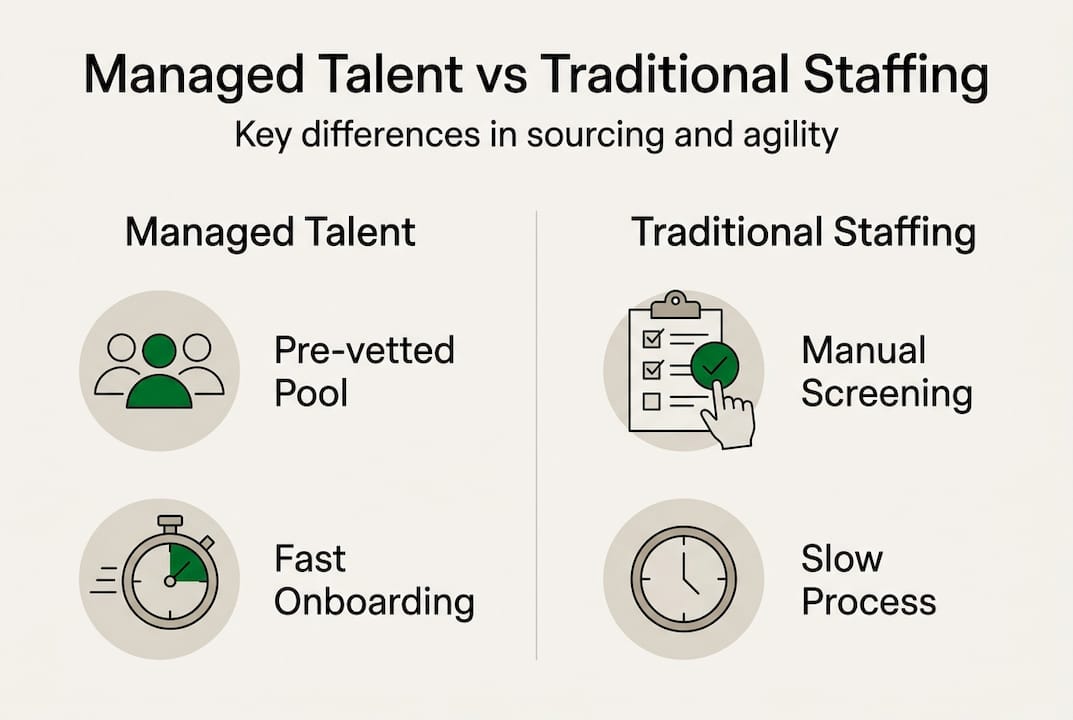
The talent acquisition strategic differences framework emphasizes focusing on strategic acquisition rather than broad HR strategies. This distinction matters because it clarifies where managed talent adds the most value in your overall workforce strategy.
Key considerations when comparing these models:
- Project duration: Managed talent excels for defined projects (3-12 months) while traditional hiring suits permanent roles
- Specialized skills: Managed talent provides faster access to niche expertise not available locally
- Budget flexibility: Managed talent offers predictable costs while traditional hiring involves variable recruiter fees and internal overhead
- Management capacity: Managed talent includes ongoing oversight while traditional hiring requires internal performance management
- Market conditions: Managed talent maintains consistent quality regardless of talent market tightness
For most organizations, the optimal approach combines both models strategically. Use traditional hiring for core team positions requiring deep organizational knowledge and long-term commitment. Deploy managed talent services comparison for project-based work, specialized technical needs, and situations requiring rapid scaling.
This hybrid strategy provides workforce flexibility while maintaining a stable core team. Your permanent employees focus on strategic initiatives and institutional knowledge while managed talent augments capacity for specific projects. Product managers gain the agility to staff initiatives quickly without waiting for lengthy approval processes or recruitment cycles.
Explore Fuerza’s managed talent solutions for your team
Implementing managed talent strategies becomes significantly easier when you partner with providers who understand the unique needs of US enterprises and startups. Fuerza offers AI-powered staffing solutions that connect you with pre-vetted experts across technical and business functions, with a focus on nearshore and onshore resources that align with your time zones and communication preferences.
Our platform eliminates the uncertainty and delays typical of traditional staffing. Every professional in our network has completed rigorous technical assessments, communication evaluations, and background verification before you ever see their profile. The AI-powered matching system analyzes your project requirements, team dynamics, and timeline constraints to present candidates who genuinely fit your needs.
Key advantages of Fuerza AI-powered staffing include:
- Access to pre-vetted freelancers, contractors, and full-time professionals across technical and business disciplines
- Placement within 3-7 days from initial request to candidate interviews
- Ongoing support throughout engagements to ensure project success and address issues proactively
- Transparent pricing with no hidden fees or surprise markups
- Flexible engagement models supporting project-based, contract-to-hire, and direct hire needs
Whether you’re launching a new product initiative, scaling an existing team, or filling an unexpected gap, our managed talent services provide the speed and quality you need. Our Miami headquarters and focus on nearshore resources ensure cultural alignment and communication ease that offshore alternatives often lack.
Pro Tip: Talent markets tighten quickly, especially for specialized skills. Join Fuerza waitlist now to secure priority access when you need to staff projects quickly. Early engagement gives you first access to top professionals as they become available.
Frequently asked questions
How does managed talent reduce time to hire compared to traditional recruitment?
Managed talent providers maintain pre-vetted talent pools where candidates have already completed technical assessments and background checks. This eliminates 3-4 weeks of screening time. AI-powered matching presents qualified candidates immediately, and streamlined onboarding processes get professionals contributing within days rather than weeks.
What metrics should I track to measure managed talent program ROI?
Focus on time-to-productivity (target under 2 weeks), retention rates throughout contract periods, project completion success rates, and cost per hire compared to traditional recruitment. Also track hiring manager satisfaction scores and the percentage of managed talent professionals who transition to longer-term roles. These metrics provide a comprehensive view of program effectiveness.
How does managed talent integrate with agile workforce planning strategies?
Managed talent provides the flexibility agile methodologies require. You can scale teams up for sprint intensives or product launches, then scale back as projects stabilize. Quarterly roadmap updates align talent acquisition with shifting priorities, and rapid placement capabilities let you respond to unexpected opportunities without disrupting existing team members. Learn more about integration strategies through managed talent details.
What’s the best way for startups to begin sourcing managed talent?
Start by identifying your most urgent talent gaps and creating clear role definitions with success criteria. Research 3-5 managed talent providers and evaluate their vetting processes, talent pool depth in your required skills, and pricing models. Begin with a pilot project for one role to test the process before scaling. This approach minimizes risk while proving value to stakeholders who may be unfamiliar with managed talent models.
Recommended
- Fuerza — Hire Pre-Vetted AI & Tech Talent | AI-Powered Staffing
- Fuerza — Hire Pre-Vetted AI & Tech Talent | AI-Powered Staffing
- Fuerza — Hire Pre-Vetted AI & Tech Talent | AI-Powered Staffing
- Fuerza — Hire Pre-Vetted AI & Tech Talent | AI-Powered Staffing
- Optimize IT staffing workflow for project success