
What Is Expert Network Staffing? Key Impact for Tech Teams

Tech project deadlines rarely stand still, and maintaining the right mix of expertise can be a constant balancing act for mid-sized American startups. The demand for precise technical talent pushes teams beyond traditional hiring models toward more responsive, agile solutions. By using expert networks, organizations gain access to curated pools of specialized professionals who accelerate project delivery with deep domain knowledge. Discover which network roles and sourcing strategies streamline talent acquisition and drive better results for technology teams.
Table of Contents
Key Takeaways
| Point | Details |
| Expert Networks Offer Flexibility | These networks provide on-demand access to specialized professionals, allowing organizations to scale their teams rapidly without long-term hiring commitments. |
| Rigorous Vetting Ensures Quality | Expert networks implement comprehensive screening processes to maintain a high-quality talent pool, significantly reducing recruitment time and risks. |
| Dynamic Talent Matching | Leveraging advanced algorithms, expert networks connect businesses with precisely skilled professionals, enhancing project delivery and efficiency. |
| Legal Compliance is Essential | Organizations must navigate complex legal landscapes to ensure data privacy and contractual safeguards when engaging with expert networks. |
Defining Expert Networks and Key Roles
Expert networks represent sophisticated talent ecosystems connecting specialized professionals with organizations seeking targeted technical expertise. Unlike traditional staffing models, these networks leverage curated talent pools of highly skilled professionals who bring deep domain knowledge and precision problem-solving capabilities to enterprise teams.
The primary components of expert networks typically include several strategic roles that facilitate seamless talent matching and project delivery:
-
Technical Experts: Specialized professionals with deep skills in specific technology domains
-
Talent Acquisition Specialists: Professionals screening and vetting potential network contributors
-
Project Managers: Professionals coordinating expert engagement and performance tracking
These networks operate through sophisticated platforms that enable rapid talent deployment, offering companies unprecedented flexibility in accessing top-tier technical talent. Strategic talent sourcing allows organizations to scale teams quickly without long-term hiring commitments.
Successful expert networks distinguish themselves through rigorous vetting processes that ensure only top-tier professionals enter their talent pools. This means companies can access pre-screened, high-caliber talent with minimal administrative overhead, dramatically reducing recruitment friction and time-to-productivity.
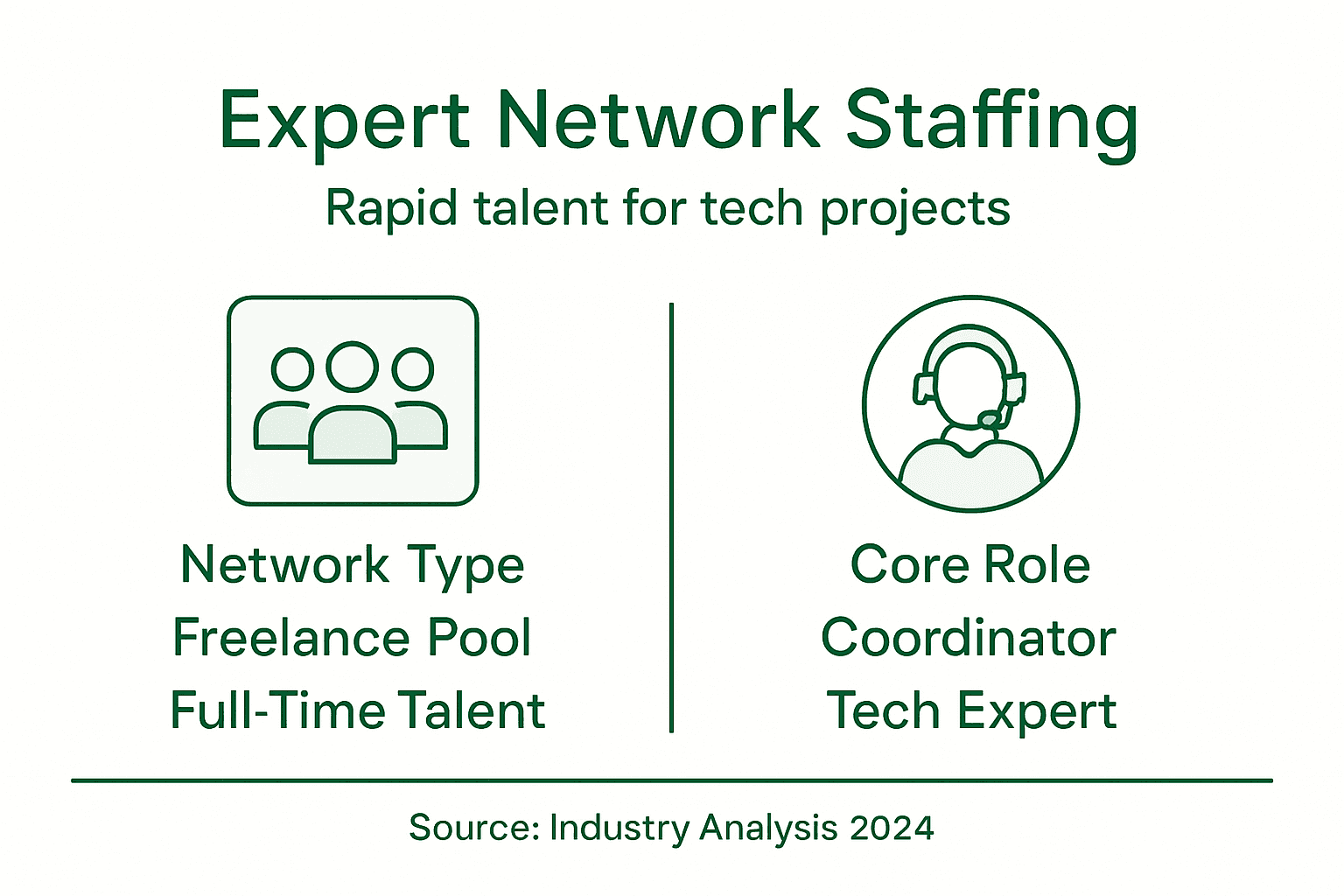
Here’s a quick overview of the main roles found in expert networks and their business impacts:
| Role | Core Function | Business Impact |
| Technical Experts | Provide specialized domain knowledge | Accelerates innovation and problem solving |
| Network Managers | Manage talent relationships and project alignment | Ensures seamless engagement and project flow |
| Talent Acquisition Specialists | Screen and vet candidates | Maintains high-quality talent pool |
| Project Managers | Oversee expert engagement and performance tracking | Maximizes project delivery and value |
Pro tip: When evaluating expert networks, prioritize platforms with transparent performance metrics and comprehensive professional profiles to ensure optimal talent matching.
Types of Expert Networks for Tech Projects
Tech organizations leverage multiple specialized expert network models to address diverse project needs and talent requirements. These networks are strategically designed to provide flexible, targeted solutions for complex technical challenges across different engagement formats and organizational contexts.
Key types of expert networks for tech projects include:
-
Freelance Networks: Independent professionals available for short-term, project-based engagements
-
On-Demand Talent Platforms: Curated pools of pre-vetted specialists across multiple technology domains
-
Specialized Technology Collectives: Focused networks of experts in specific technological disciplines like artificial intelligence, cybersecurity, or cloud engineering
-
Enterprise Consultant Networks: Professional services networks offering high-level strategic and implementation expertise
Each network type offers unique advantages depending on project complexity, budget constraints, and specific technical requirements. Agile talent sourcing enables companies to rapidly access specialized skills without traditional hiring constraints.
The most effective expert networks provide comprehensive screening processes, ensuring that only top-tier professionals with verified skills and proven track records enter their talent pools. This approach minimizes risk and accelerates project delivery by connecting organizations with precisely matched technical talent.
Expert networks transform traditional talent acquisition by offering unprecedented flexibility and specialized expertise across technology domains.
Pro tip: Evaluate expert networks based on their vetting processes, domain specialization, and ability to match precise technical skill requirements.
How Expert Networks Operate for Staffing
Expert networks function through sophisticated digital platforms that streamline talent matching and project deployment for technology organizations. These complex ecosystems leverage advanced algorithms and comprehensive professional databases to connect businesses with precisely skilled professionals across multiple technological domains.
The typical operational workflow for expert networks involves several critical stages:
-
Talent Acquisition: Rigorous screening and vetting of potential network professionals
-
Skills Mapping: Detailed profiling of individual expert capabilities and specializations
-
Client Matching: Algorithmic alignment of project requirements with most suitable talent
-
Performance Tracking: Continuous monitoring of expert engagement and project outcomes
Talent matching technologies enable organizations to rapidly identify and deploy specialized professionals with minimal administrative overhead. The process transforms traditional recruitment by creating dynamic, flexible talent ecosystems that adapt quickly to evolving technological demands.
Most expert networks implement multi-layered verification processes to ensure professional credibility. These typically include comprehensive background checks, skill assessments, portfolio reviews, and ongoing performance evaluations. By maintaining stringent quality standards, these networks minimize hiring risks and provide companies with high-confidence talent solutions.
Expert networks represent a paradigm shift in talent acquisition, replacing rigid hiring models with dynamic, technology-driven talent ecosystems.
Pro tip: Prioritize expert networks with transparent vetting processes and comprehensive skill validation mechanisms to maximize talent quality and project success.

Legal, Compliance, and Data Concerns
Expert networks operate within complex legal landscapes that demand rigorous data protection, privacy compliance, and contractual frameworks. Technology organizations must carefully navigate multiple regulatory requirements to ensure secure, legally sound talent engagement across different jurisdictions and professional domains.
Key legal and compliance considerations for expert networks include:
-
Data Privacy: Adhering to regulations like GDPR, CCPA, and international data protection standards
-
Intellectual Property: Establishing clear ownership and confidentiality agreements
-
Employment Classification: Defining precise contractor and independent professional relationships
-
Cross-Border Talent Engagement: Managing international legal and tax implications
Compliance management strategies help organizations mitigate potential legal risks associated with distributed workforce models. These frameworks ensure transparent, legally defensible talent acquisition processes that protect both companies and professional contributors.
Most expert networks implement comprehensive legal safeguards through detailed contractual mechanisms. These typically include non-disclosure agreements, intellectual property transfer protocols, and explicit performance expectations that clarify the scope of professional engagement and protect organizational interests.
Legal compliance is not just a requirement, but a fundamental trust mechanism in modern talent ecosystems.
Pro tip: Consult specialized legal counsel to develop tailored compliance frameworks specific to your organization’s unique expert network engagement model.
Expert Networks Versus Traditional Staffing
Traditional staffing models rely on rigid hiring processes and long-term employment commitments, while expert networks represent a more dynamic, flexible approach to talent acquisition. These modern platforms fundamentally transform how technology organizations source, engage, and manage professional talent across complex project landscapes.
Key differences between expert networks and traditional staffing include:
-
Talent Flexibility: Expert networks offer on-demand access to specialized professionals
-
Recruitment Speed: Dramatically reduced time-to-hire compared to traditional methods
-
Cost Efficiency: Lower overhead and more precise skill matching
-
Global Talent Pool: Access to worldwide expertise without geographical limitations
-
Skill Specificity: Precise matching of technical skills to project requirements
Talent acquisition strategies enable organizations to move beyond conventional hiring constraints, creating more agile and responsive workforce models. Traditional staffing relies on generalist recruitment approaches, while expert networks use sophisticated algorithmic matching to connect precise technical talent with specific project needs.
The technological infrastructure supporting expert networks enables unprecedented transparency and performance tracking. Unlike traditional staffing models that depend on lengthy interview processes and generalized candidate evaluations, these platforms provide detailed professional profiles, verified skill assessments, and real-time performance metrics.
The following comparison illustrates how expert networks differ from traditional staffing models:
| Feature | Expert Networks | Traditional Staffing |
| Engagement Model | On-demand, flexible | Long-term, rigid hiring |
| Talent Source | Curated global specialists | Local or generalist candidates |
| Recruitment Speed | Rapid deployment | Slow, lengthy process |
| Skill Matching | Algorithm-driven, highly targeted | Manual, less precise |
| Cost Structure | Lower overhead, project-based pricing | Higher fixed salaries |
Expert networks represent a paradigm shift from transactional hiring to strategic talent ecosystems.
Pro tip: Evaluate your organization’s project requirements holistically to determine whether expert networks can provide more efficient and targeted talent solutions.
Unlock Agile Expert Staffing Solutions for Your Tech Team
Struggling to find precise technical expertise quickly and without long hiring delays? This article highlights the challenges of traditional staffing and the need for flexible expert networks with rigorous vetting and rapid deployment. At Fuerza, we understand your pain points around talent flexibility, recruitment speed, and compliance. Our AI-powered staffing platform connects you with pre-vetted Nearshore and Onshore experts who deliver exactly the specialized skills your projects demand.
Experience the power of strategic talent sourcing with our curated pools of freelance, full-time, and contractor professionals headquartered in Miami focused on serving US clients. Say goodbye to administrative friction and hello to accelerated innovation by leveraging our technology-driven talent ecosystems designed for seamless expert engagement.

Ready to transform how your tech teams access top-tier experts? Explore how our AI-powered staffing can reduce time-to-productivity and increase project success. Visit Fuerza today to connect with the specialists that drive your technology forward. Start scaling with confidence by tapping into tailored strategic talent sourcing solutions built for modern tech organizations.
Frequently Asked Questions
What is an expert network?
Expert networks are talent ecosystems that connect specialized professionals with organizations seeking targeted technical expertise, enabling companies to access top-tier skills for complex projects.
How do expert networks differ from traditional staffing methods?
Expert networks provide on-demand access to specialized talent, faster recruitment speeds, and lower overhead costs compared to traditional staffing methods, which rely on long-term employment commitments and slower hiring processes.
What roles exist within expert networks?
Key roles in expert networks include technical experts, network coordinators, talent acquisition specialists, and project managers, each facilitating effective talent matching and project delivery.
How do organizations ensure quality when using expert networks?
Organizations can ensure quality by evaluating expert networks based on their rigorous vetting processes, performance tracking systems, and the transparency of their skill validation mechanisms.