
Structure Hybrid Teams: Boost Role Clarity by 25% in 2026

Many hybrid teams face persistent delays and engagement drops stemming from unclear role structures and misaligned technology. This guide provides actionable strategies to structure your hybrid teams effectively, boosting collaboration and productivity. You will learn prerequisites, role definition methods, technology integration tactics, leadership alignment strategies, cultural inclusion practices, and metrics tracking to ensure sustainable hybrid team success.
Table of Contents
- Prerequisites For Building Effective Hybrid Teams
- Defining Clear Roles And Responsibilities
- Technology Stack And Integration For Seamless Collaboration
- Leadership And Team Alignment Strategies
- Cultural Inclusion And Psychological Safety In Hybrid Teams
- Common Challenges In Hybrid Team Structures And How To Overcome Them
- Expected Outcomes And Success Metrics For Hybrid Teams
- Unlock Hybrid Team Success With Fuerza’s AI-Powered Staffing
Key Takeaways
| Point | Details |
|---|---|
| Clear roles boost productivity | Role clarity increases productivity by 25% and reduces workflow conflicts. |
| Balanced tech integration reduces delays | Unified communication platforms cut project delays by 30% when properly implemented. |
| Leadership training raises success rates | Targeted hybrid management training increases project success rates by 28%. |
| Inclusive culture improves safety | Virtual team-building improves psychological safety by 22% and fosters innovation. |
| Measuring outcomes drives improvement | Tracking engagement, innovation, and burnout metrics ensures continuous hybrid team optimization. |
Prerequisites for Building Effective Hybrid Teams
Before structuring your hybrid team, establish foundational elements that enable smooth operations. These prerequisites set the stage for role clarity, technology adoption, and cultural alignment.
Start by identifying and deploying essential communication and project management tools. Platforms like Slack for instant messaging, Zoom for video conferencing, and dedicated project management software create the digital infrastructure hybrid teams need. Without these tools in place, even well-designed team structures will struggle to execute.
Assess leadership readiness next. Evaluate whether your managers understand hybrid dynamics and can lead distributed teams effectively. Provide targeted training focused on asynchronous communication, remote engagement tactics, and conflict resolution across time zones. Leaders unprepared for hybrid challenges create bottlenecks that undermine team performance.
Create clear documentation outlining hybrid roles and responsibilities before onboarding begins. This documentation should specify which tasks require onsite presence, which can be completed remotely, and how handoffs occur between distributed team members. Ambiguous role definitions lead to duplicated effort and missed deliverables.
Design onboarding processes tailored specifically for hybrid integration. Traditional onboarding assumes full-time office presence, but hybrid teams need structured introductions to both digital tools and in-person workflows. Plan for 4 to 6 weeks of gradual integration, allowing new members to build relationships across both remote and onsite contexts.
Key preparation steps include:
- Deploy unified communication platforms before team formation
- Conduct leadership readiness assessments and provide training
- Document role expectations with onsite versus remote specifications
- Create 4 to 6 week hybrid-specific onboarding timelines
- Test technology integrations with pilot groups before full rollout
Fuerza’s hybrid team role clarity services help you establish these prerequisites quickly, reducing setup time and accelerating team productivity from day one.
Defining Clear Roles and Responsibilities
Once prerequisites are established, explicitly define roles to eliminate confusion and boost efficiency. Role clarity increases productivity by 25% by reducing time spent on clarification and conflict resolution.

Allocate responsibilities by considering whether tasks benefit from onsite collaboration or remote focus. Customer-facing presentations might require onsite presence, while deep analytical work often thrives in remote settings. Map each team member’s core responsibilities to the environment where they perform best, then document these allocations clearly.
Use role charters to formalize expectations. A role charter specifies deliverables, decision-making authority, collaboration requirements, and success metrics for each position. This written agreement reduces overlap, clarifies accountability, and gives team members reference points when questions arise about who owns what.
Conduct regular role reviews every quarter to adapt as project needs evolve. Hybrid teams operate in dynamic environments where priorities shift and new tools emerge. Quarterly reviews let you reassess whether role allocations still serve the team effectively or need adjustment based on performance data and team feedback.
Engage team members directly in role definition to increase buy-in and uncover practical insights. Team members understand day-to-day workflow realities better than managers, so their input creates more realistic and effective role structures. This collaborative approach also builds ownership and reduces resistance to structural changes.
Pro Tip: Hold role definition workshops where team members map their actual workflows, then compare these maps to official role descriptions to identify gaps and overlaps requiring clarification.
Essential role definition practices:
- Map tasks to optimal environments (onsite versus remote)
- Create written role charters specifying deliverables and authority
- Schedule quarterly role reviews to adapt to changing needs
- Involve team members in defining their own role boundaries
- Document handoff procedures between onsite and remote colleagues
Fuerza’s hybrid role definition strategies streamline this process with templates and facilitation support tailored to your team’s specific needs.
Technology Stack and Integration for Seamless Collaboration
With roles defined, select and integrate technology that enables these workflows effectively. Unified communication platforms reduce project delays by 30% when teams adopt tools that support both synchronous and asynchronous collaboration.
Balance synchronous tools like video calls with asynchronous methods including Slack channels and email threads. Synchronous communication builds rapport and resolves complex issues quickly, while asynchronous methods respect different time zones and work styles. Over-reliance on either mode creates friction.
Prioritize tools that integrate with existing HR and staffing systems. Seamless data flow between communication platforms, project management software, and staffing databases reduces manual updates and ensures everyone works from current information. Look for platforms offering API connections and pre-built integrations.
Consider AI-driven features that enhance hybrid workflows. Automated meeting transcriptions, intelligent task routing, and sentiment analysis help distributed teams stay aligned without constant manual oversight. These features become especially valuable as team size grows and coordination complexity increases.
| Tool Category | Examples | Key Features | Best For |
|---|---|---|---|
| Video Conferencing | Zoom, Microsoft Teams | Screen sharing, breakout rooms, recordings | Real-time collaboration, all-hands meetings |
| Async Messaging | Slack, Discord | Channels, threads, integrations | Quick updates, ongoing discussions |
| Project Management | Asana, Monday.com | Task tracking, timelines, dashboards | Workflow coordination, deadline management |
| Documentation | Notion, Confluence | Wikis, templates, version control | Knowledge sharing, process documentation |
| Time Management | Clockify, Toggl | Time tracking, reporting, analytics | Productivity measurement, billing |
Pro Tip: Conduct quarterly tech stack audits to identify underused tools consuming budget and attention without delivering proportional value, then consolidate to streamline workflows.
Explore technology solutions for hybrid teams and specialized hybrid communications tech designed for distributed collaboration. For infrastructure needs, cloud hybrid architecture consulting ensures your technology foundation scales with team growth.
Leadership and Team Alignment Strategies
Technology alone cannot drive hybrid success without engaged leadership. Leadership engagement correlates with 40% higher employee satisfaction in hybrid environments, making leadership development a critical investment.
Set regular leadership check-ins creating structured feedback loops between managers and team members. Weekly one-on-ones provide space for addressing concerns before they escalate, while monthly team retrospectives identify systemic issues requiring structural changes. These rhythms prevent small frustrations from becoming major conflicts.
Define leadership responsibilities specific to hybrid workflows. Hybrid leaders need skills beyond traditional management, including asynchronous communication mastery, remote performance evaluation techniques, and strategies for building trust across physical distance. Document these hybrid-specific expectations so leaders understand what success looks like.
Invest in targeted training that increases project success rates by 28% through improved hybrid management capabilities. Training should cover facilitating hybrid meetings, managing distributed project timelines, recognizing remote engagement signals, and adapting leadership styles to individual team member needs.
Encourage transparent communication and proactive conflict resolution. Hybrid teams face unique tensions around perceived fairness between onsite and remote members. Leaders who address these tensions openly and establish clear policies for resource allocation, promotion criteria, and recognition reduce resentment and build cohesion.
Key leadership alignment tactics:
- Establish weekly one-on-ones and monthly team retrospectives
- Document hybrid-specific leadership responsibilities and success criteria
- Provide training in asynchronous communication and remote engagement
- Create transparent policies addressing onsite versus remote equity concerns
- Model effective hybrid behaviors including camera-on meetings and async updates
Fuerza’s hybrid leadership training programs equip your managers with practical skills and frameworks proven to improve hybrid team outcomes.
Cultural Inclusion and Psychological Safety in Hybrid Teams
Aligned leadership creates the foundation for building inclusive culture and psychological safety essential for innovation. Virtual team-building improves psychological safety by 22%, enabling teams to take risks and share ideas freely.
Adopt inclusive communication norms ensuring all voices receive equal hearing regardless of location. Establish practices like requiring written pre-reads before meetings so introverted or non-native speakers can prepare, rotating meeting times to share time zone burden fairly, and using digital collaboration boards where everyone contributes simultaneously rather than sequentially.
Schedule hybrid social activities maintaining connection beyond work tasks. Virtual coffee chats, online game sessions, and quarterly in-person gatherings build relationships that make day-to-day collaboration smoother. Neglecting face-to-face interaction lowers engagement by 25%, so budget for periodic in-person team events even when most work occurs remotely.
Prioritize psychological safety to reduce burnout and spark innovation. Team members who feel safe admitting mistakes, asking questions, and proposing unconventional ideas contribute more creative solutions. Leaders foster this safety by responding constructively to failures, acknowledging their own uncertainties, and celebrating learning over perfection.
Use structured virtual team-building exercises designed specifically for distributed groups. Activities like collaborative problem-solving challenges, skill-sharing sessions where team members teach hobbies, and storytelling circles where people share personal backgrounds build trust and mutual understanding across physical separation.
Cultural inclusion practices:
- Rotate meeting times to distribute time zone inconvenience fairly
- Require written pre-reads allowing thoughtful preparation
- Budget for quarterly in-person gatherings supplementing daily remote work
- Create channels for celebrating both work wins and personal milestones
- Model vulnerability by leaders admitting uncertainties and mistakes
These practices transform hybrid teams from transactional work groups into cohesive communities driving sustained performance.
Common Challenges in Hybrid Team Structures and How to Overcome Them
Even well-designed hybrid teams encounter predictable challenges requiring proactive solutions. Understanding these pitfalls helps you prevent or resolve them quickly.
Unclear communication norms cause 60% of hybrid conflicts. Without explicit agreements about when to use email versus Slack versus video calls, team members make inconsistent choices creating confusion. Establish a communication charter specifying which channels suit which message types, expected response times, and escalation paths for urgent issues.
Balance synchronous and asynchronous communication carefully to avoid 15% efficiency losses from poor timing choices. Over-scheduling meetings interrupts deep work, while relying solely on async channels slows decision-making requiring real-time discussion. Map your team’s work types to appropriate communication modes and review this mapping quarterly.
Establish standardized performance metrics enabling rapid issue identification. When some team members work onsite and others remotely, managers need objective productivity measures transcending physical presence. Track output-based metrics like completed tasks, code commits, or customer interactions rather than hours logged or office attendance.
Invest early in leadership training and clear communication protocols rather than reacting to problems after they emerge. Proactive preparation costs less than damage control, and preventing conflicts preserves team morale better than resolving them after trust erodes.
Regularly evaluate team dynamics for emerging conflict signals like declining participation in discussions, increasing response times, or subtle comments suggesting frustration. Address these signals immediately through one-on-ones and team discussions before they calcify into entrenched divisions.
Challenge mitigation strategies:
- Create communication charters specifying channel usage and response expectations
- Map work types to appropriate sync versus async communication modes
- Track output-based metrics transcending physical location
- Conduct monthly pulse surveys capturing engagement and satisfaction trends
- Address conflict signals immediately before they become major issues
Preventive approaches solve problems faster and cheaper than reactive firefighting.
Expected Outcomes and Success Metrics for Hybrid Teams
Track specific metrics validating whether your hybrid structure delivers intended benefits and identifying areas needing adjustment.
Measure innovation output increases of 18% within six months of implementing inclusive hybrid practices. Track metrics like new ideas proposed, experiments launched, and process improvements adopted. Rising innovation indicates psychological safety and effective collaboration across locations.
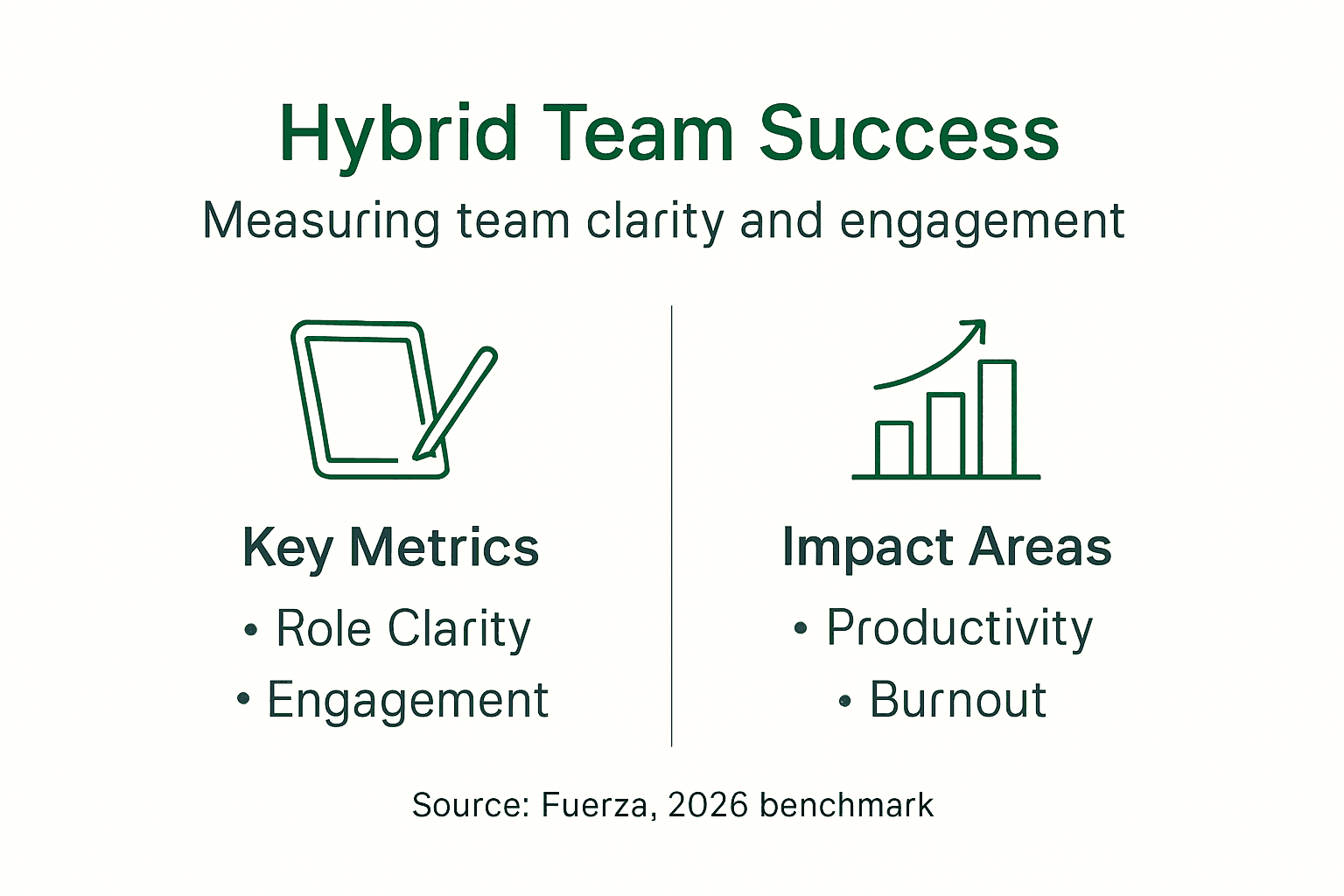
Monitor engagement improvements up to 25% following targeted inclusion efforts. Use regular pulse surveys measuring connection to team mission, satisfaction with communication practices, and confidence in leadership. Engagement directly predicts retention and performance.
Track project success rates rising 28% after leadership receives hybrid-specific training. Define success as projects delivered on time, within budget, and meeting quality standards. Improved success rates validate training investments and guide ongoing development priorities.
Record burnout reductions by 20% from implementing balanced hybrid staffing models. Monitor indicators like time off usage, sick days, turnover rates, and self-reported stress levels. Sustainable hybrid structures prevent exhaustion rather than merely optimizing output.
| Metric | Baseline | 6-Month Target | 12-Month Target | Measurement Frequency |
|---|---|---|---|---|
| Innovation output | Current level | +18% | +25% | Monthly |
| Team engagement score | Current score | +15% | +25% | Quarterly |
| Project success rate | Current rate | +20% | +28% | Per project |
| Burnout indicators | Current level | -15% | -20% | Quarterly |
| Role clarity rating | Current rating | +20% | +30% | Quarterly |
Regularly review these metrics with your team, celebrating wins and diagnosing shortfalls collaboratively. Transparency around metrics builds trust and shared ownership of outcomes.
Explore hybrid team performance tracking tools that automate data collection and visualization, making metric monitoring effortless and actionable.
Unlock Hybrid Team Success with Fuerza’s AI-Powered Staffing
Building effective hybrid teams requires the right talent, clear structures, and ongoing support. Fuerza simplifies this process through AI-powered staffing solutions reducing hybrid team assembly time by 35%.
Access pre-vetted tech talent already skilled in hybrid collaboration, eliminating the learning curve slowing traditional hires. Our nearshore and onshore experts integrate seamlessly into US-based teams, bringing both technical expertise and cultural alignment.
Combine our talent acquisition with hybrid team role definition services creating clarity from day one. We help you establish role charters, communication protocols, and success metrics tailored to your specific business context and team composition.
Pro Tip: Join Fuerza’s waitlist to access cutting-edge hybrid team building tools, exclusive training resources, and priority placement for top talent as your needs evolve.
Our Miami-headquartered team understands US enterprise requirements while leveraging global talent pools, delivering quality, speed, and cost efficiency. Whether you need freelancers for project spikes or full-time hires for core roles, Fuerza’s AI-powered platform matches you with experts who accelerate your hybrid team success.
FAQ
How do I establish effective communication protocols in hybrid teams?
Create a communication charter specifying which channels suit different message types and expected response times. Balance synchronous video calls for complex discussions with asynchronous Slack and email for updates. Schedule regular check-ins maintaining clarity and engagement across locations.
What technology tools best support hybrid team collaboration?
Prioritize unified platforms integrating communication, project management, and documentation. Combine video conferencing tools like Zoom with async messaging platforms like Slack and project trackers like Asana. Select tools offering API integrations with existing HR systems to streamline workflows and reduce manual updates.
How can leaders improve hybrid team cohesion?
Invest in hybrid-specific leadership training covering asynchronous communication, remote engagement tactics, and distributed conflict resolution. Establish regular one-on-ones and team retrospectives creating feedback loops. Model inclusive behaviors like rotating meeting times and acknowledging contributions from all locations equally.
What are key metrics for assessing hybrid team success?
Track innovation output, engagement scores, project success rates, and burnout indicators. Measure whether teams deliver 18% more innovations, achieve 25% higher engagement, and complete 28% more projects successfully while reducing burnout by 20%. Review metrics quarterly and adjust strategies based on trends.
How do I foster psychological safety in distributed teams?
Encourage leaders to model vulnerability by admitting uncertainties and responding constructively to failures. Use virtual team-building exercises like collaborative challenges and storytelling sessions building trust. Create channels celebrating both professional wins and personal milestones, reinforcing that team members matter beyond their output.
Recommended
- Fuerza — Hire Pre-Vetted AI & Tech Talent | AI-Powered Staffing
- Fuerza — Hire Pre-Vetted AI & Tech Talent | AI-Powered Staffing
- Fuerza — Hire Pre-Vetted AI & Tech Talent | AI-Powered Staffing
- Fuerza — Hire Pre-Vetted AI & Tech Talent | AI-Powered Staffing
- Enterprise & Large-Scale CX Support | Altiam CX
- Team Building for Remote Workers: How Video Can Help - Kicker Video