
Master remote team management: 7 strategies for 2026

Managing remote teams in 2026 isn’t about tracking hours or micromanaging. It’s about building trust, setting clear expectations, and creating systems that empower distributed teams to deliver results. Product and hiring managers face unique challenges coordinating across time zones, maintaining accountability, and preserving culture without physical offices. This guide provides actionable strategies to transform your remote team management approach and drive measurable performance improvements.
Table of Contents
- Selection Criteria For Evaluating Remote Team Management Strategies
- Set Clear Expectations And Define Ownership
- Build Trust And Foster A Remote-First Leadership Mindset
- Establish Structured Communication Systems
- Leverage Tools For Transparency And Productivity
- Looking To Build A High-Performing Remote Team?
- Frequently Asked Questions
Key takeaways
| Point | Details |
|---|---|
| Clear ownership | Define measurable deliverables and assign explicit accountability to eliminate confusion and boost productivity. |
| Trust over surveillance | Outcome-based management that empowers autonomy consistently outperforms hours tracking and micromanagement. |
| Structured communication | Balance async and sync channels with clear protocols to reduce noise and support deep work. |
| Collaborative technology | Select tools that enhance visibility, task tracking, and team accountability across distributed environments. |
| Well-being focus | Prioritize mental health and work boundaries to improve retention and sustain long-term performance. |
Selection criteria for evaluating remote team management strategies
Before implementing new management practices or tools, you need clear criteria to evaluate what actually works. Remote team success depends on five interconnected systems: communication, ownership, performance measurement, cultural alignment, and documentation. Remote team management is effective when these systems work together to create clarity and accountability.
Your evaluation framework should prioritize clarity in communication. Ambiguous messages and unclear priorities create rework and frustration across distributed teams. Next, focus on outcome-based performance measurement rather than activity tracking. Hours logged or messages sent tell you nothing about value delivered.
Trust and autonomy serve as essential productivity levers. Teams that feel micromanaged disengage quickly, while those with clear ownership and decision-making authority perform better. Cultural alignment and well-being support sustainability. Remote work can blur boundaries, leading to burnout if managers don’t actively support healthy practices.
Finally, select technology that enhances visibility without creating administrative burden. The right tools make ownership transparent, streamline collaboration, and integrate seamlessly with existing workflows. When evaluating remote team management services, assess how each factor aligns with your team’s size, complexity, and performance goals.
Key evaluation criteria include:
- Communication clarity and channel definition
- Outcome measurement versus activity tracking
- Trust building and autonomy support
- Cultural practices and well-being initiatives
- Tool integration and workflow efficiency
Set clear expectations and define ownership
Ambiguity kills remote team productivity. When deliverables, deadlines, and ownership remain unclear, team members waste time seeking clarification or duplicating work. Setting clear expectations focused on outcomes significantly improves remote team productivity.

Start by defining measurable deliverables for every project and task. What specific output does success look like? When is it due? Who owns the final result? Make these details visible in shared dashboards and project updates so everyone can see what’s expected.
Shift your focus from hours worked to outcomes delivered. A developer who completes a feature in three focused hours adds more value than one who logs eight hours with minimal progress. Document completion criteria clearly so team members know exactly when they’ve met expectations.
Ownership clarity empowers your team. When someone owns a deliverable, they make decisions, solve problems, and drive progress without constant check-ins. This autonomy increases engagement and accountability simultaneously. Use collaboration and timing tools to track ownership and progress transparently.
Pro Tip: Create a simple ownership matrix that maps every active project to a single responsible person. Review it weekly to ensure nothing falls through the cracks and everyone knows their commitments.
Best practices for setting expectations:
- Write down success criteria before starting work
- Assign one owner per deliverable, never shared ownership
- Use public dashboards to make progress visible
- Focus retrospectives on outcomes achieved, not hours logged
- Update documentation when expectations change
Build trust and foster a remote-first leadership mindset
Physical oversight disappears in remote environments, so trust becomes the foundation of effective management. Trust is the currency of remote work, built through competence trust and character trust. Competence trust develops when team members consistently deliver quality work. Character trust grows through honest communication about challenges and timely follow-through on commitments.
Remote-first leadership requires a fundamental mindset shift. You can’t walk the floor or observe who’s at their desk. Instead, you direct, support, and remove obstacles while empowering your team to make decisions. This approach increases engagement because people feel trusted and valued.
Micromanagement suffocates remote teams faster than in-office teams. Constant status requests and surveillance tools signal distrust, causing top performers to disengage or leave. Replace control with clear expectations, then give your team space to deliver.
Consistent, timely communication strengthens remote relationships. Regular one-on-ones, transparent updates about company direction, and prompt responses to questions build psychological safety. When team members trust you’ll support them, they take ownership and solve problems independently.
Remote leadership that replaces control with trust drives stronger team performance.
Develop remote leadership strategies that emphasize these trust-building practices:
- Deliver consistent quality and meet commitments to model reliability
- Communicate honestly about challenges instead of hiding problems
- Empower decision-making at the lowest appropriate level
- Respond promptly to questions and requests for support
- Celebrate wins publicly and address issues privately
Establish structured communication systems
Unstructured communication creates chaos in remote teams. Messages flood multiple channels, urgent items get buried, and people spend more time managing communications than doing deep work. Structured async workflows and defined response time protocols improve remote team focus and productivity.
Define urgency tiers that guide channel selection and response expectations. Critical issues requiring immediate attention belong in direct messages or dedicated urgent channels. Project updates, questions, and non-time-sensitive information work better asynchronously in project management tools or threaded discussions.
Use Slack or similar platforms for real-time coordination when needed. Reserve these channels for genuinely urgent topics or quick clarifications. For everything else, leverage project tools like Jira, Asana, or Linear where updates persist and context remains accessible.
Asynchronous communication supports deep focus work. When team members can read and respond to updates on their schedule, they maintain concentration and produce higher quality output. Constant interruptions fragment attention and reduce productivity significantly.
Develop clear protocols defining when to use synchronous meetings versus async updates. Meetings work well for brainstorming, complex discussions, or relationship building. Status updates, progress reports, and routine information sharing belong in async channels. Implement communication timing tools to optimize coordination across time zones.
Communication channel comparison
| Channel | Best Use Cases | Response Time | Benefits |
|---|---|---|---|
| Slack/Teams | Urgent issues, quick questions | Under 1 hour | Real-time coordination, immediate feedback |
| Project tools | Task updates, documentation | Within 24 hours | Persistent context, reduces interruptions |
| Formal communications, external stakeholders | Within 48 hours | Professional record, broad reach | |
| Video calls | Complex discussions, relationship building | Scheduled | Rich interaction, nuanced communication |
| Async video | Detailed explanations, demos | Within 48 hours | Visual context without scheduling overhead |
Pro Tip: Establish quiet hours where team members can disable notifications and focus on deep work without guilt. Most coordination can wait a few hours.
Implement these communication practices:
- Create channel guidelines defining what belongs where
- Set team-wide response time expectations by channel type
- Use threading to keep conversations organized and searchable
- Record key decisions in permanent documentation, not chat
- Schedule focused work blocks and communicate availability clearly
Leverage tools for transparency and productivity
The right technology stack makes remote team coordination seamless while the wrong tools create friction and confusion. Selecting the right tools like Asana, Jira, and Slack enhances task visibility and team accountability.
Popular collaboration platforms offer different strengths. Asana excels at visual project planning and deadline tracking. Jira provides robust issue tracking for technical teams. Monday.com offers flexible workflows adaptable to various team structures. Notion combines documentation, databases, and project management in one platform.
Align tools with your team’s specific needs. Small teams benefit from simple, integrated solutions that minimize context switching. Larger organizations need robust tools handling complex workflows, permissions, and reporting. Consider budget constraints, learning curves, and integration capabilities with existing systems.
Transparency in ownership and progress becomes automatic with proper tool implementation. Team members see who owns what, current status, and upcoming deadlines without asking. This visibility reduces coordination overhead and helps everyone stay aligned. Explore remote collaboration services that integrate seamlessly with leading platforms.
Key tool selection factors:
- Task tracking and progress visualization capabilities
- Real-time and asynchronous communication features
- Integration with existing technology stack
- Scalability as team size grows
- Mobile access for distributed coordination
- Reporting and analytics for performance insights
Remote collaboration tools comparison
| Tool | Best For | Key Strengths | Limitations | Pricing |
|---|---|---|---|---|
| Asana | Project management | Visual timelines, easy templates | Limited customization | Free to $24.99/user/month |
| Jira | Technical teams | Advanced issue tracking, agile workflows | Steep learning curve | $7.75 to $15.25/user/month |
| Slack | Team communication | Rich integrations, searchable history | Can become noisy | Free to $12.50/user/month |
| Notion | Documentation and wikis | Flexible databases, all-in-one workspace | Performance issues at scale | Free to $15/user/month |
| Linear | Product development | Fast interface, streamlined workflows | Limited reporting | $8 to $15/user/month |
Looking to build a high-performing remote team?
Implementing these remote team management strategies becomes even more powerful when you start with top talent. Fuerza connects you with pre-vetted AI and tech experts ready to join your distributed team. Our AI-powered staffing solutions match you with nearshore and onshore professionals who fit your technical requirements and cultural values.
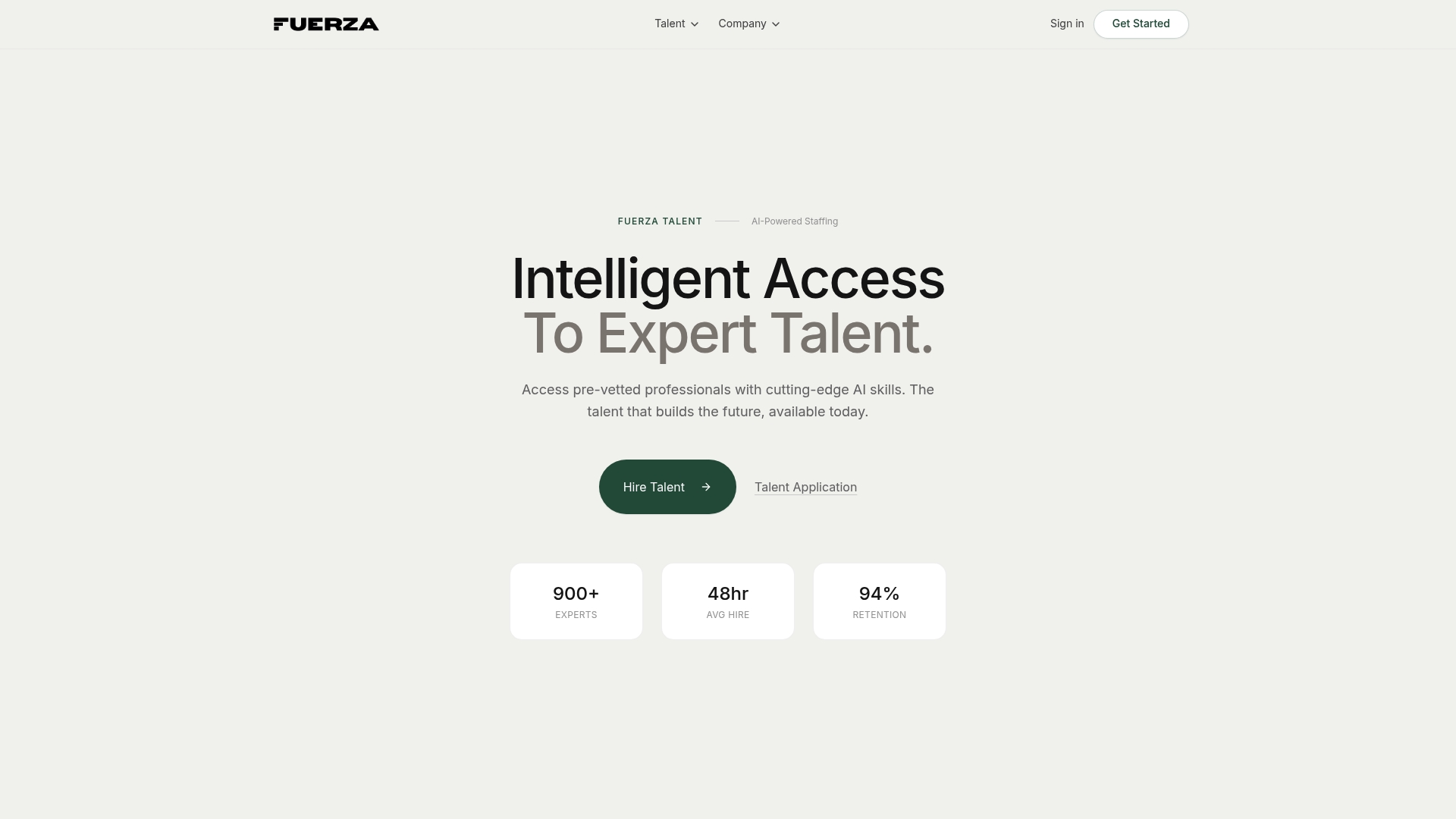
We handle the vetting process so you get candidates with proven remote work skills and technical expertise. Whether you need freelancers for project work or full-time team members, our remote team staffing services streamline hiring and help you build teams that thrive using the management practices outlined in this guide. Join Fuerza waitlist today to access specialized talent that accelerates your remote team performance.
Frequently asked questions
What are the most important tips for managing remote teams effectively?
Focus on outcome-based goals rather than hours tracked, build trust through consistent communication, and establish clear ownership for every deliverable. Use structured communication protocols that balance async and sync channels to reduce noise while maintaining alignment.
How do I build trust with remote team members I rarely see in person?
Deliver on commitments consistently, communicate openly about challenges, and empower team members to make decisions within their scope. Regular one-on-ones, transparent company updates, and prompt responses to questions strengthen psychological safety and trust over time.
What tools should I use for remote team collaboration?
Select tools based on team size and workflow complexity. Asana or Monday.com work well for project tracking, Slack or Teams for real-time communication, and Notion or Confluence for documentation. Ensure tools integrate smoothly and don’t create administrative overhead that outweighs their benefits.
How do I balance synchronous and asynchronous communication?
Reserve synchronous meetings for brainstorming, complex discussions, and relationship building. Use async channels for status updates, routine information sharing, and non-urgent questions. Define clear urgency tiers and response time expectations so team members know which channel to use for different situations.
How can I prevent remote team burnout?
Set clear boundaries around working hours, establish quiet periods for deep work, and actively discourage after-hours communication. Monitor workload distribution to prevent consistent overwork. Encourage time off and model healthy work practices yourself to signal that well-being matters as much as productivity.
Recommended
- Fuerza — Hire Pre-Vetted AI & Tech Talent | AI-Powered Staffing
- Fuerza — Hire Pre-Vetted AI & Tech Talent | AI-Powered Staffing
- Fuerza — Hire Pre-Vetted AI & Tech Talent | AI-Powered Staffing
- Fuerza — Hire Pre-Vetted AI & Tech Talent | AI-Powered Staffing
- MSP Near Me: Discover Local IT Solutions - CinchOps, Inc.
- What Is Remote Work Security? Stop 350% More Attacks in 2026 – IT Start