
Remote collaboration guide for product and hiring managers

Many teams confuse remote work with remote collaboration, but they address different needs. Remote work simply means employees can perform tasks from any location. Remote collaboration, however, centers on synchronized teamwork across distances using digital tools and platforms. For product and hiring managers at startups and enterprises, understanding this distinction is crucial. This guide clarifies what remote collaboration truly means, explores its challenges and benefits, and provides actionable strategies for building high-performing distributed teams through effective hiring, tool selection, and continuous improvement practices.
Table of Contents
- Key takeaways
- What is remote collaboration? Definition and key concepts
- Challenges and benefits of remote collaboration
- Tools and technologies that enable effective remote collaboration
- Best practices for hiring and managing remote collaborative teams
- Measuring success and continuously improving remote collaboration
- Discover how Fuerza supports your remote collaboration needs
- FAQ
Key Takeaways
| Point | Details |
|---|---|
| Collaboration vs remote work | Remote collaboration requires synchronized teamwork through digital tools, not merely performing tasks from any location. |
| Tools drive success | Cloud based platforms and integrated suites enable real time and asynchronous collaboration across time zones. |
| Clear communication culture | Establishing shared norms and virtual rituals builds trust and cohesion for distributed teams. |
| Hiring managers shape teams | Strategic recruitment and AI powered staffing align candidates with needed collaboration skills and time zone awareness. |
What is remote collaboration? Definition and key concepts
Remote collaboration describes teamwork across distances using technology, where team members synchronize efforts toward shared goals despite physical separation. This differs fundamentally from remote work, which simply allows individuals to complete tasks from any location without requiring constant interaction. Product and hiring managers must recognize this distinction because remote collaboration demands specific technological infrastructure, communication protocols, and team dynamics that solo remote work does not.
The core elements of remote collaboration include:
- Real-time and asynchronous communication channels that enable continuous dialogue
- Shared digital workspaces where team members access common files and resources
- Project management systems that track progress and dependencies across distributed contributors
- Video conferencing capabilities that replicate face-to-face interactions
- Cultural practices that build trust and cohesion without physical proximity
For startups and enterprises, remote collaboration represents a strategic capability rather than just a workplace arrangement. It enables access to global talent pools, reduces overhead costs associated with physical offices, and creates flexibility that attracts top performers. However, success requires intentional design of workflows, careful selection of AI-powered staffing solutions, and ongoing investment in team cohesion practices.
The technology landscape has evolved to support sophisticated remote collaboration models. Cloud-based platforms now offer integrated suites combining communication, project management, and file sharing in unified environments. These systems enable distributed teams to maintain productivity levels comparable to co-located groups when implemented thoughtfully. Product managers must evaluate these tools based on team size, project complexity, and existing workflows to ensure seamless adoption.
Understanding remote collaboration as a distinct discipline helps hiring managers recruit candidates with appropriate skills. Beyond technical competencies, successful remote collaborators demonstrate strong written communication, proactive engagement, and comfort with digital tools. They navigate time zone differences gracefully and contribute to team culture through virtual channels. Recognizing these qualities during recruitment builds foundations for effective distributed teams.
Challenges and benefits of remote collaboration
Remote collaboration presents specific obstacles that product and hiring managers must address systematically. Communication barriers top the list, as text-based exchanges lack the nuance of in-person conversations. Misunderstandings escalate more easily when team members cannot read body language or tone. Time zone differences compound this challenge, creating windows where synchronous communication becomes difficult or impossible. Cultural variations in communication styles and work expectations add another layer of complexity for globally distributed teams.
Coordination difficulties emerge when team members work asynchronously. Dependencies between tasks become harder to manage when collaborators operate on different schedules. Project timelines stretch as handoffs between time zones introduce delays. Technology failures, from poor internet connections to platform outages, can halt progress unexpectedly. These challenges demand proactive management strategies and robust backup systems.

Despite these obstacles, remote collaboration improves productivity and broadens talent pools when organizations implement proper systems. Access to global talent represents perhaps the most significant advantage. Companies can recruit specialists regardless of geographic location, building teams with precisely the skills their projects require. This flexibility proves especially valuable for startups competing for scarce technical expertise against larger enterprises.
Cost savings extend beyond reduced office space. Remote collaboration eliminates commute time, allowing team members to redirect that energy toward productive work or personal well-being. Organizations report decreased turnover as employees value the flexibility remote arrangements provide. Productivity often increases as individuals work during their peak performance hours rather than conforming to arbitrary office schedules.
Effective remote collaboration transforms geographic constraints into competitive advantages, enabling organizations to assemble optimal teams unconstrained by location while maintaining or exceeding the productivity of traditional office environments.
Diverse perspectives flourish in remote collaborative settings. Teams spanning multiple regions bring varied approaches to problem-solving, fostering innovation through cross-cultural exchange. This diversity strengthens decision-making and product development when managers create inclusive environments where all voices contribute equally. The key lies in establishing clear remote collaboration services that facilitate rather than hinder these interactions.
Tools and technologies that enable effective remote collaboration
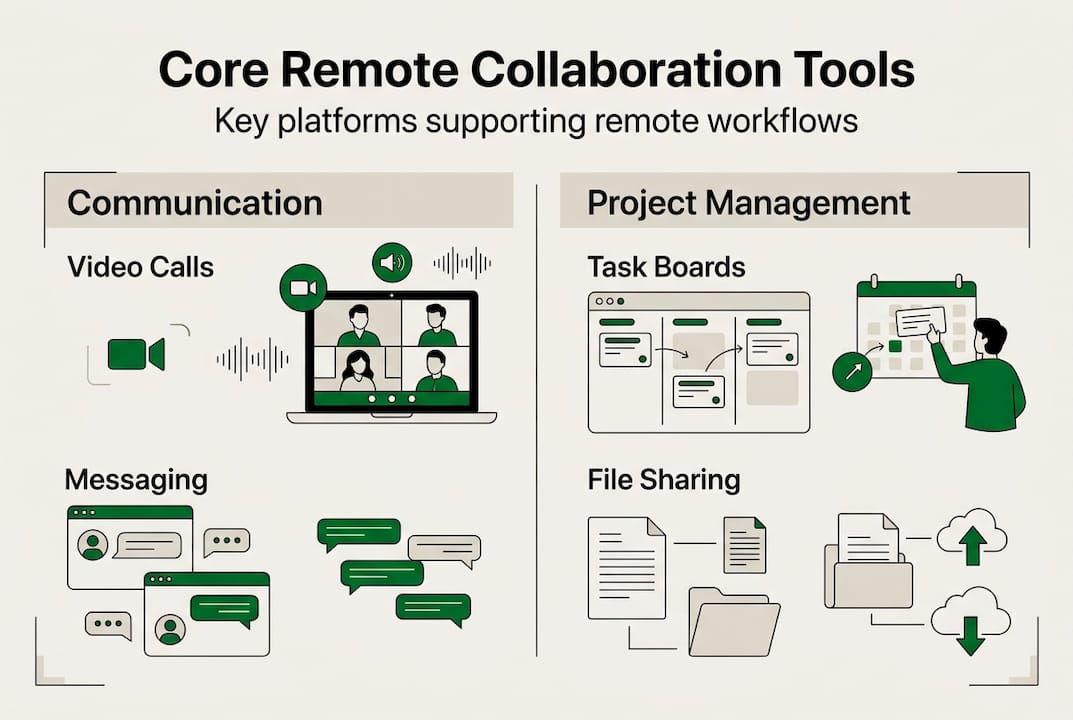
Selecting appropriate tools forms the foundation of successful remote collaboration. Communication platforms fall into several categories, each serving distinct purposes. Instant messaging tools like Slack or Microsoft Teams enable quick exchanges and maintain social connections through casual channels. Video conferencing systems such as Zoom or Google Meet replicate face-to-face meetings for complex discussions requiring visual cues. Email remains essential for formal communications and detailed explanations requiring documentation.
Project management platforms organize work across distributed teams. Tools like Asana, Jira, or Monday.com provide visibility into task assignments, deadlines, and dependencies. They create shared understanding of project status without requiring constant status meetings. File sharing and collaboration tools, including Google Workspace or Microsoft 365, enable simultaneous document editing and version control. These systems prevent the confusion of multiple file versions circulating among team members.
| Tool Category | Primary Purpose | Popular Options | Best For |
|---|---|---|---|
| Communication | Real-time messaging and video | Slack, Teams, Zoom | Daily interactions and quick questions |
| Project Management | Task tracking and workflow | Asana, Jira, Monday | Complex projects with dependencies |
| File Collaboration | Document sharing and editing | Google Workspace, Dropbox | Content creation and review |
| Whiteboarding | Visual brainstorming | Miro, Mural | Creative sessions and planning |
Integration between tools significantly impacts adoption and effectiveness. Teams struggle when they must switch constantly between disconnected platforms. Look for solutions that connect through APIs or native integrations, allowing information to flow seamlessly. A notification in your messaging app about a project update saves time compared to checking multiple systems separately. Choosing collaboration tools tailored to workflow prevents productivity losses from context switching.
Pro Tip: Conduct quarterly tool audits to identify underutilized platforms and consolidate where possible. Tool fatigue diminishes productivity when team members face too many systems. Standardize on core platforms that serve multiple functions rather than adopting specialized solutions for every need.
Ease of use determines actual adoption rates regardless of feature richness. Complex tools with steep learning curves create resistance, especially among team members less comfortable with technology. Prioritize intuitive interfaces and provide comprehensive onboarding for new platforms. Consider your team’s technical sophistication when evaluating collaboration platforms. A powerful but complicated system helps nobody if team members avoid using it.
Security and compliance requirements constrain tool selection for many enterprises. Evaluate platforms based on data encryption, access controls, and regulatory compliance certifications. Healthcare and financial services organizations face particularly strict requirements. Cloud-based tools must demonstrate robust security practices and provide audit trails for sensitive operations. Balance convenience with protection to avoid exposing confidential information.
Best practices for hiring and managing remote collaborative teams
Building effective remote collaborative teams starts with strategic hiring focused on specific competencies. Product and hiring managers should prioritize these steps:
- Define collaboration requirements explicitly in job descriptions, highlighting communication expectations and tool proficiencies
- Assess written communication skills through work samples and asynchronous interview components
- Evaluate candidates’ experience with remote work and their strategies for staying connected
- Test problem-solving approaches through collaborative exercises conducted virtually
- Verify time zone compatibility and willingness to accommodate team schedules
- Check references specifically about collaboration style and reliability in distributed settings
Onboarding remote team members requires extra attention to relationship building and cultural integration. Create structured programs that introduce new hires to team members through video calls rather than just email introductions. Assign mentors who can answer questions and provide informal guidance during the adjustment period. Document processes thoroughly so new collaborators can find answers independently. Schedule regular check-ins during the first month to address concerns before they escalate.
Communication norms must be explicit rather than assumed. Establish guidelines covering response time expectations for different channels. Clarify when to use synchronous versus asynchronous communication. Define meeting protocols, including whether cameras should be on and how to signal desire to speak. These agreements prevent misunderstandings that damage remote talent hiring efforts and team cohesion.
Building trust across distances demands intentional effort. Create opportunities for informal interaction through virtual coffee chats or online social events. Celebrate achievements publicly in team channels. Encourage vulnerability by having leaders share challenges and uncertainties. Trust grows when team members see each other as complete people rather than just names in a chat window. Effective hiring processes and ongoing management sustain this foundation.
Pro Tip: Implement weekly asynchronous updates where each team member shares accomplishments, upcoming priorities, and blockers. This practice maintains visibility without excessive meetings while building accountability and connection.
Cultural differences require awareness and accommodation in global teams. Communication directness varies significantly across cultures, with some preferring explicit statements while others use subtle cues. Time orientation differs, affecting punctuality expectations and deadline flexibility. Decision-making styles range from hierarchical to consensus-driven. Educate teams about these variations and create space for different approaches rather than imposing a single standard.
Performance management in remote settings focuses on outcomes rather than activity. Measure contributions through delivered results and impact on team goals instead of hours logged or messages sent. Provide regular feedback through scheduled one-on-one conversations rather than waiting for annual reviews. Address performance issues promptly and directly, as problems fester more quickly in remote environments where casual observation is impossible.
Measuring success and continuously improving remote collaboration
Quantifying remote collaboration effectiveness requires tracking multiple dimensions beyond simple productivity metrics. Start with these key performance indicators:
- Project completion rates and timeline adherence compared to estimates
- Team member engagement scores from regular pulse surveys
- Communication response times across different channels and urgency levels
- Tool adoption rates and feature utilization within collaboration platforms
- Employee retention and satisfaction specific to remote work arrangements
Qualitative feedback provides context that numbers alone cannot capture. Conduct monthly retrospectives where team members discuss what is working well and what needs adjustment. Create anonymous channels for surfacing concerns that individuals might hesitate to raise publicly. Interview departing team members specifically about remote collaboration experiences to identify systemic issues.
| Metric | Measurement Method | Target Range | Improvement Action |
|---|---|---|---|
| Response Time | Track message timestamps | Under 4 hours for urgent items | Clarify communication protocols |
| Meeting Effectiveness | Post-meeting surveys | Above 4.0 out of 5.0 | Reduce meeting frequency or duration |
| Collaboration Tool Usage | Platform analytics | Above 80% active weekly | Provide additional training |
| Team Cohesion | Quarterly surveys | Above 7.0 out of 10 | Increase informal interaction opportunities |
Data-driven approaches and continuous feedback optimize remote team collaboration through iterative refinement. Review metrics quarterly to identify trends rather than reacting to individual data points. Compare performance across different teams to discover practices worth spreading. Share results transparently with teams to build collective ownership of improvement efforts.
Experimentation accelerates improvement when approached systematically. Test new collaboration approaches with small groups before rolling out broadly. Define success criteria in advance and measure results objectively. Document learnings from both successful and failed experiments to build organizational knowledge. This scientific approach prevents wasted effort on ineffective changes while scaling proven innovations.
Technology evolution demands periodic reevaluation of team performance metrics and tooling choices. New platforms emerge regularly with features that address previous limitations. Conduct annual reviews of your collaboration technology stack to identify opportunities for consolidation or enhancement. Involve team members in evaluation processes since they experience daily friction points that managers might miss.
Leadership commitment to continuous improvement signals its importance to the entire organization. Allocate dedicated time for teams to refine their collaboration practices rather than treating it as an afterthought. Celebrate improvements publicly to reinforce their value. Model desired behaviors by participating actively in feedback processes and implementing suggestions visibly.
Discover how Fuerza supports your remote collaboration needs
Navigating remote collaboration challenges becomes significantly easier with the right talent and support systems. Fuerza specializes in connecting startups and enterprises with pre-vetted experts who excel in distributed team environments. Our AI-powered platform matches your specific needs with professionals experienced in remote collaboration, whether you require freelancers, contractors, or full-time team members.
Our focus on nearshore and onshore resources ensures time zone alignment and cultural compatibility for US-based clients. We understand that successful remote collaboration depends on more than just technical skills. Every professional in our network demonstrates strong communication abilities and proven remote work experience. Explore our staffing services to see how we streamline hiring for distributed teams. Access our pre-vetted AI and tech talent pool to accelerate your team building, or join the waitlist to experience our platform.
FAQ
What is the difference between remote work and remote collaboration?
Remote work refers to completing job tasks from any location outside a traditional office, often independently. Remote collaboration specifically involves coordinated teamwork across distances using digital tools, requiring active interaction and shared goal pursuit. The distinction matters because collaboration demands different skills, tools, and management approaches than solo remote work.
Which tools are essential for successful remote collaboration?
Three categories form the essential toolkit: communication platforms for messaging and video calls, project management systems for tracking work and dependencies, and file sharing tools for document collaboration. Specific choices depend on team size and workflow, but integration between tools significantly impacts effectiveness. Start with one solid option in each category rather than adopting numerous specialized platforms.
How can hiring managers support remote collaboration during recruitment?
Prioritize candidates demonstrating strong written communication skills and proactive engagement styles during the hiring process. Assess remote work experience and ask specific questions about how candidates maintain connections with distributed teammates. Include collaborative exercises in interviews conducted virtually to observe real-time interaction patterns. Verify time zone compatibility and willingness to accommodate team schedules before extending offers.
How do you measure remote collaboration effectiveness?
Track both quantitative metrics like project completion rates, response times, and tool adoption alongside qualitative feedback from team surveys and retrospectives. Focus on outcomes rather than activity levels, measuring impact on goals instead of hours worked. Conduct quarterly reviews to identify trends and compare performance across teams. Combine multiple data sources for a complete picture rather than relying on single metrics.
What are the biggest challenges in remote collaboration?
Communication barriers top the list, as text-based exchanges lack the nuance of face-to-face conversations and misunderstandings escalate more easily. Time zone differences create coordination difficulties and limit synchronous communication windows. Cultural variations in communication styles and work expectations add complexity for global teams. Technology failures and asynchronous work patterns can introduce delays and frustration when not managed proactively.
Recommended
- Fuerza — Hire Pre-Vetted AI & Tech Talent | AI-Powered Staffing
- Fuerza — Hire Pre-Vetted AI & Tech Talent | AI-Powered Staffing
- Fuerza — Hire Pre-Vetted AI & Tech Talent | AI-Powered Staffing
- Fuerza — Hire Pre-Vetted AI & Tech Talent | AI-Powered Staffing
- Remote B2B Selling: Driving Growth with Digital Tools