
Optimize team productivity in 2026 with proven strategies

Selecting the right productivity strategies can feel overwhelming when your team faces unclear priorities, inefficient collaboration, and fragmented workflows. Modern work environments demand structured approaches that actually move the needle on team performance. This article presents a proven framework for evaluating and implementing productivity strategies that drive measurable results. You’ll discover how to align goals using OKRs, leverage AI automation, and build collaboration practices that transform team effectiveness in hybrid and distributed settings.
Table of Contents
- Selection Criteria: How To Choose The Right Productivity Strategies For Your Team
- 1. Set Clear And Actionable Goals With OKRs
- 2. Foster Intentional Collaboration For Enhanced Synergy
- 3. Leverage AI And Automation To Eliminate Low-Value Work
- 4. Summary Comparison Of Productivity Strategies
- 5. Situational Recommendations: Choosing Strategies Based On Your Team’s Needs
Key takeaways
| Point | Details |
|---|---|
| Selection criteria matter | Choose strategies based on business alignment, hybrid suitability, implementation ease, AI potential, and employee wellbeing impact. |
| Clear goals drive results | OKRs improve productivity by 10-20% through measurable objectives and accountability. |
| Collaboration boosts revenue | Intentional collaboration increases revenue by 20% and innovation success by 33%. |
| AI eliminates busywork | Automation saves 20-30 minutes per meeting, freeing teams for strategic work and reducing burnout. |
| Tailor strategies to context | Hybrid teams need async communication while startups benefit most from focused goal frameworks. |
Selection criteria: how to choose the right productivity strategies for your team
Not every productivity strategy fits every team. The right approach depends on your specific business goals, team structure, and operational context. You need objective criteria to evaluate which strategies will deliver real results rather than adding complexity.
Start by assessing alignment with business goals and measurable outcomes. Any productivity initiative should directly support revenue growth, customer satisfaction, or operational efficiency. Hybrid and distributed teams require solutions that scale across locations and time zones without creating bottlenecks.
Implementation ease matters significantly. Strategies requiring major cultural shifts or expensive tools may stall before delivering value. Consider your team’s readiness for changes like asynchronous communication or automation. Look for approaches that integrate naturally with existing workflows rather than replacing everything at once.
AI integration potential has become critical in 2026. Tools that leverage artificial intelligence can multiply the impact of your productivity efforts by automating repetitive work and surfacing insights from data. AI-powered staffing services help teams access the technical expertise needed to implement these solutions effectively.
Employee wellbeing impact cannot be ignored. Strategies that reduce burnout and improve work satisfaction create sustainable productivity gains rather than short term spikes followed by exhaustion.
Pro Tip: Prioritize strategies offering both measurable outcomes and genuine employee engagement improvements. Quick wins that damage morale will cost you more in turnover and decreased performance than they save in efficiency.
1. Set clear and actionable goals with OKRs
Objectives and Key Results provide a proven framework for translating big picture vision into concrete, measurable actions. OKRs break down ambitious objectives into specific results that teams can track weekly or monthly. This transparency eliminates confusion about priorities and creates accountability across all levels.
The framework works by defining 3 to 5 key objectives per quarter, then assigning 2 to 4 measurable key results to each objective. Everyone sees how their work contributes to larger goals. This visibility reduces wasted effort on misaligned projects and helps teams focus energy where it matters most.
Research shows teams using OKRs achieve 10-20% higher productivity compared to those without structured goal frameworks. The improvement comes from clearer direction, faster decision making, and reduced time spent on low impact activities. Teams also report better coordination across departments when everyone works from the same goal framework.
Implementing OKRs requires initial setup time but delivers ongoing benefits. Start by identifying your top business priorities for the quarter. Translate each priority into a measurable outcome. Assign ownership and establish check in cadences. The key is keeping OKRs visible and revisiting them regularly rather than setting and forgetting.
Successful OKR adoption depends on timing and resource allocation. Teams need capacity to define goals thoughtfully and track progress consistently. Rushing implementation or overloading already stretched teams undermines the benefits.

Pro Tip: Review and update OKRs every two weeks rather than waiting until quarter end. Frequent check ins maintain momentum, surface obstacles early, and allow teams to adjust course before small issues become major problems.
2. Foster intentional collaboration for enhanced synergy
Deliberate collaboration practices create exponentially more value than ad hoc teamwork. Intentional collaboration means designing specific opportunities for knowledge sharing, cross functional problem solving, and collective innovation. This approach breaks down silos that fragment efforts and slow progress.
Structured collaboration improves outcomes across multiple dimensions. Teams share expertise more effectively, reducing duplicate work and accelerating learning curves. Different perspectives combine to generate more creative solutions than any individual could produce alone. Alignment increases as team members understand how their work connects to others’ contributions.
The business impact is substantial. Collaborative teams generate 20% higher revenue and achieve 33% greater innovation success rates compared to siloed organizations. These gains come from faster problem resolution, better resource utilization, and improved adaptation to market changes.
For hybrid and distributed teams, intentional collaboration requires extra design. You cannot rely on spontaneous hallway conversations or informal brainstorming sessions. Instead, create dedicated spaces and times for collaborative work. Use collaborative documents, virtual whiteboards, and structured workshops to facilitate meaningful interaction.
Practical approaches include cross functional project teams, regular knowledge sharing sessions, and mentorship programs. The key is making collaboration purposeful rather than assuming it will happen naturally. Define clear objectives for collaborative activities and measure outcomes to ensure they deliver value.
Access to diverse talent strengthens collaborative capacity. Joining the right staffing network connects you with specialists who bring fresh perspectives and fill skill gaps on your team.
3. Leverage AI and automation to eliminate low-value work
Artificial intelligence and automation tools fundamentally change how productive teams can be by removing repetitive tasks that drain energy and time. These technologies handle routine work like meeting notes, scheduling coordination, data entry, and report generation. This shift frees your team to focus on strategic thinking, creative problem solving, and relationship building.
The time savings add up quickly. AI tools save 20-30 minutes per meeting through automatic transcription and action item extraction. Across a typical week with 10 to 15 meetings, that’s 3 to 7 hours recovered per person. Multiply across your entire team and the productivity gains become transformative.
Research shows automation frees up 15 to 25 minutes daily for each employee by reducing manual workloads, directly improving job satisfaction and lowering burnout risks.
Beyond time savings, automation improves accuracy and consistency. AI systems don’t forget tasks, miss details, or make transcription errors. They apply the same quality standards every time. This reliability reduces rework and the stress of tracking numerous small tasks manually.
Job satisfaction increases when people spend less time on tedious work. Nobody enjoys data entry, calendar tetris, or reformatting documents. Eliminating these tasks through automation lets people engage in more meaningful work that uses their skills and judgment. This shift reduces burnout and improves retention.
Hybrid and remote teams benefit especially from AI powered workflows. Distributed collaboration depends on excellent documentation and clear communication. AI tools ensure nothing falls through the cracks despite time zones and asynchronous work patterns.
AI-powered talent platforms help you access the technical expertise needed to implement automation effectively. Specialists can identify high impact automation opportunities and integrate tools smoothly into existing systems.
4. Summary comparison of productivity strategies
Choosing between multiple proven strategies requires understanding their trade offs. This comparison helps you evaluate approaches based on expected impact, implementation requirements, and team fit.
| Strategy | Productivity Gain | Implementation Difficulty | Best For | Time to Results |
|---|---|---|---|---|
| OKRs and goal setting | 10-20% improvement | Medium (requires training and buy-in) | Teams lacking alignment or clear priorities | 1-2 quarters |
| Intentional collaboration | 20% revenue increase, 33% more innovation | Medium (needs cultural shift and tools) | Siloed organizations or hybrid teams | 2-3 months |
| AI and automation | 15-30 min saved daily per person | Low to Medium (tool selection and integration) | Teams with high meeting load or manual work | 2-4 weeks |
| Outcome focused culture | 15-25% efficiency gains | High (requires leadership commitment) | Organizations with outdated management styles | 6-12 months |
| Meeting optimization | 50% reduction in meeting time | Low (policy changes and discipline) | Over-meeting teams or distributed groups | 1 month |
| Workload limits | Reduced burnout, sustained performance | Medium (capacity planning needed) | Teams experiencing high turnover or exhaustion | 1-2 months |
| Async communication | 40-50% fewer interruptions | Medium (requires tools and norms) | Distributed teams across time zones | 6-8 weeks |
The table reveals important patterns. Quick wins like meeting optimization and AI adoption deliver results within weeks and require less organizational change. Deeper cultural shifts like outcome focused management create larger long term gains but demand months of consistent effort.
Your team size and structure influence which strategies fit best. Small startups can implement OKRs or meeting policies quickly with minimal friction. Large enterprises need more planning and change management to roll out new productivity approaches across departments.
Budget constraints matter too. AI tools and collaboration platforms require investment, though costs have decreased significantly. Cultural changes like workload limits or async communication cost little financially but demand time and attention from leadership.
Consider combining strategies for multiplicative effects. OKRs work better when supported by collaboration tools and meeting optimization. AI adoption accelerates when paired with async communication norms. The key is sequencing implementation thoughtfully rather than attempting everything simultaneously.
5. Situational recommendations: choosing strategies based on your team’s needs
Your specific context determines which productivity strategies will succeed. Teams facing different challenges need tailored approaches rather than one size fits all solutions. These recommendations help you match strategies to your situation.
Hybrid teams juggling remote and office work benefit most from async communication and meeting optimization. These approaches reduce the coordination burden of mixed locations and time zones. Implementing no meeting days preserves focus time for deep work. Async tools ensure distributed team members stay informed without requiring constant real time availability.
Startups needing better alignment should prioritize OKRs and focused goal frameworks. Early stage companies often struggle with too many competing priorities and unclear direction. OKRs create structure without bureaucracy, helping small teams coordinate effectively as they scale. Clear goals also improve hiring by defining exactly what skills and expertise you need. Hybrid team resource allocation becomes more strategic when guided by well defined objectives.
Enterprises seeking burnout reduction must adopt AI, automation, and workload limits. Large organizations accumulate processes that create unnecessary manual work. Identifying and automating these tasks protects employee wellbeing while improving efficiency. Setting explicit workload limits prevents the common pattern of piling more work onto high performers until they leave.
Teams with collaboration problems should implement intentional collaboration practices and cross functional projects. Silos develop naturally over time as organizations grow. Breaking them down requires deliberate effort through shared goals, collaborative tools, and structured opportunities for knowledge sharing across groups.
High growth companies need combinations of strategies that scale. Start with OKRs to maintain alignment during rapid expansion. Add AI and automation early to avoid accumulating technical debt and manual processes. Build collaborative practices into your culture from the beginning rather than trying to retrofit them later.
Boost your team’s productivity with Fuerza AI staffing solutions
Implementing productivity strategies successfully often requires specialized expertise you may not have in house. Fuerza connects you with pre-vetted AI specialists, automation engineers, and technical professionals who can accelerate your transformation. Our AI-powered platform matches your specific needs with skilled experts working nearshore and onshore.
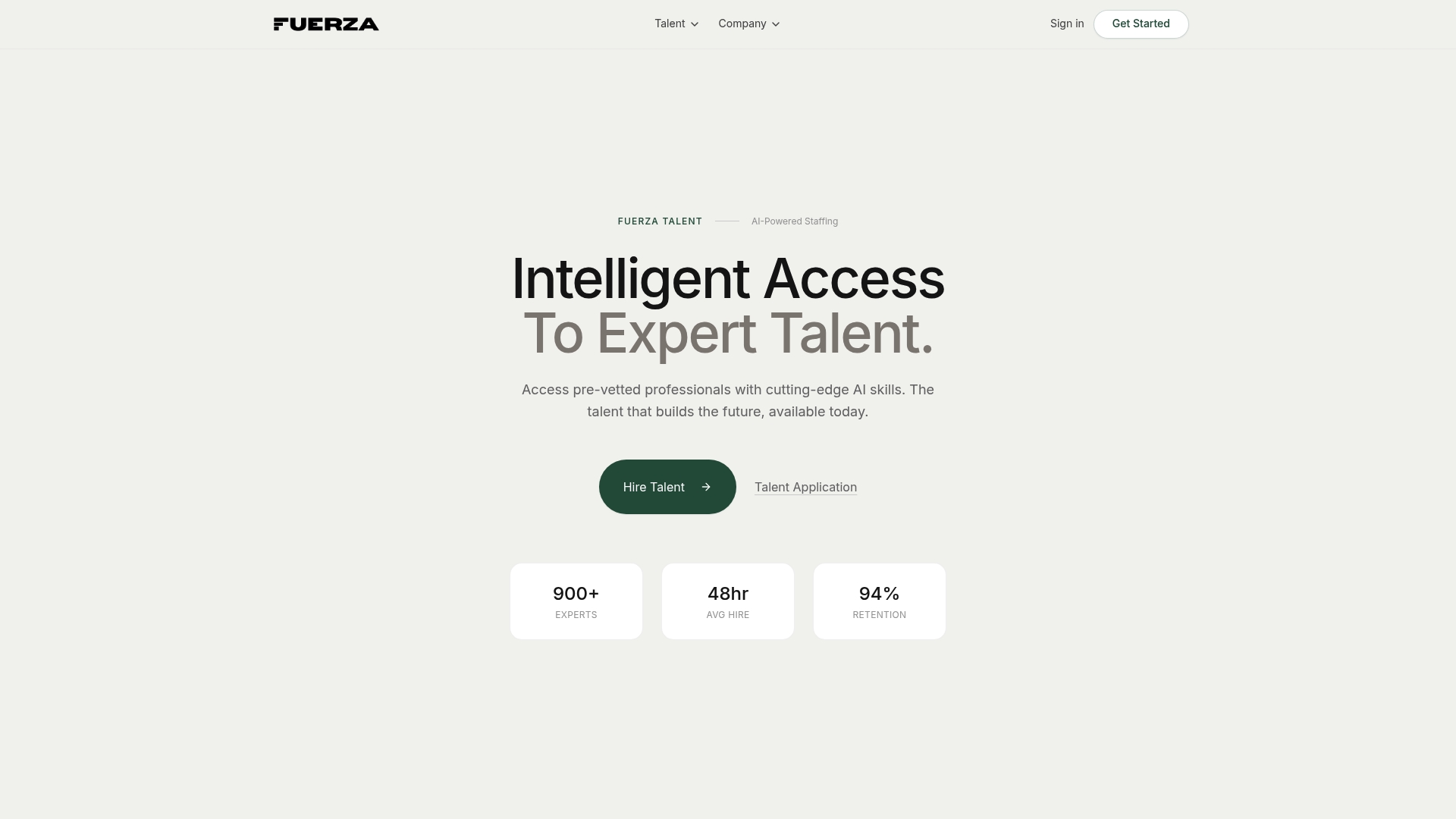
Whether you need someone to integrate AI tools, optimize workflows, or build custom automation, Fuerza’s staffing solutions provide flexible access to top tier talent. We support hybrid and remote teams with contractors, freelancers, and full time placements. Our Miami based company specializes in serving US enterprises and startups with the technical resources to implement cutting edge productivity improvements. Explore our services to find the right expertise for your team, or join our waitlist to get priority access to our expanding talent network.
FAQ
What are OKRs and why are they important for teams?
OKRs (Objectives and Key Results) are a goal setting framework that breaks down big objectives into specific, measurable results. They improve team clarity and accountability by making priorities visible to everyone. This structure helps teams focus energy on high impact work rather than getting lost in day to day tasks.
How can AI tools improve meeting efficiency?
AI automatically captures meeting notes, extracts action items, and schedules follow up sessions without manual effort. This automation saves 20 to 30 minutes per meeting by eliminating administrative tasks. Teams can focus on discussion and decision making rather than note taking, improving both meeting quality and efficiency.
What strategies work best for hybrid teams struggling with too many meetings?
Async communication reduces meeting needs by up to 50% by allowing team members to collaborate on their own schedules. Implementing dedicated no meeting days minimizes interruptions and context switching for deep work. These approaches help distributed teams coordinate effectively without excessive real time synchronization.
How quickly can teams see results from productivity improvements?
Quick wins like meeting optimization and AI adoption show results within 2 to 4 weeks. Deeper changes like OKRs or cultural shifts require 1 to 3 months for initial impact. The timeline depends on implementation difficulty and how well the strategy fits your existing workflows and team readiness.
What role does employee wellbeing play in productivity strategies?
Strategies that reduce burnout and improve work satisfaction create sustainable productivity rather than temporary spikes. Overworked, stressed teams eventually see performance decline despite short term gains. Prioritizing wellbeing through workload limits, automation of tedious tasks, and flexible work arrangements protects long term team effectiveness and retention.