
How to Improve Team Productivity with AI Staffing

Leading a hybrid team at a fast-paced American startup can make everyday productivity feel like an obstacle course. Complexity and inefficiency are real barriers, with McKinsey reporting that only half of leaders feel ready for workplace disruptions. Recognizing these challenges matters because building lasting competitive advantage starts with diagnosing and solving productivity pain points. This guide offers practical steps to identify root causes and deploy smarter, AI-driven staffing so your team can move faster and work smarter.
Table of Contents
Quick Summary
| Key Insight | Explanation |
| 1. Assess Productivity Challenges | Diagnose workflow breakdowns to identify targeted improvement areas. Use surveys and metrics for deeper insights. |
| 2. Implement AI-Driven Staffing | Leverage AI technologies for efficient recruitment and talent management. Train HR teams on new tools. |
| 3. Integrate Hybrid Talent | Strategically blend human expertise with AI capabilities. Ensure clear communication and role definitions. |
| 4. Utilize Collaboration Tools | Select user-friendly digital tools to enhance team communication and collaboration across hybrid teams. |
| 5. Continuously Monitor Outcomes | Establish performance benchmarks and use analytics to refine processes regularly for optimal productivity. |
Step 1: Assess Current Productivity Challenges
Diagnosing your team’s productivity roadblocks is the critical first step toward meaningful performance improvement. Understanding where your current workflow breaks down allows you to create targeted, strategic solutions that address real operational bottlenecks.
To systematically assess your productivity challenges, start by conducting a comprehensive organizational analysis. McKinsey research reveals that only half of leaders feel prepared to respond to workplace disruptions, indicating widespread organizational complexity.
Here are key areas to evaluate when assessing productivity challenges:
-
Team communication effectiveness and potential communication gaps
-
Workflow bottlenecks that slow down project completion
-
Resource allocation and individual workload distribution
-
Technology infrastructure supporting team collaboration
-
Employee engagement and potential burnout indicators
The goal isn’t just identifying problems, but understanding the root causes limiting your team’s performance.
Consider implementing structured diagnostics like anonymous surveys, performance metrics analysis, and one-on-one discussions to gather nuanced insights. Organizational productivity research emphasizes the importance of actively managing structural factors that impact team performance.
Here’s a summary of productivity challenges and potential diagnostic methods to address them:
| Challenge Area | Likely Cause | Suggested Diagnostic Tool |
| Communication gaps | Misaligned expectations | Anonymous team surveys |
| Workflow delays | Inefficient processes | Workflow mapping sessions |
| Overburdened staff | Poor resource allocation | Workload analytics reports |
| Technology hurdles | Outdated systems | Infrastructure audits |
| Low engagement | Burnout or lack of motivation | One-on-one interviews |
Pro tip: Create a visual workflow map to help identify specific productivity friction points and potential improvement opportunities.
Step 2: Identify and Deploy AI-Driven Staffing Solutions
Transforming your team’s talent acquisition and management strategy requires strategic implementation of AI-powered staffing technologies. By leveraging intelligent tools, you can dramatically streamline recruitment, enhance candidate matching, and optimize workforce performance.
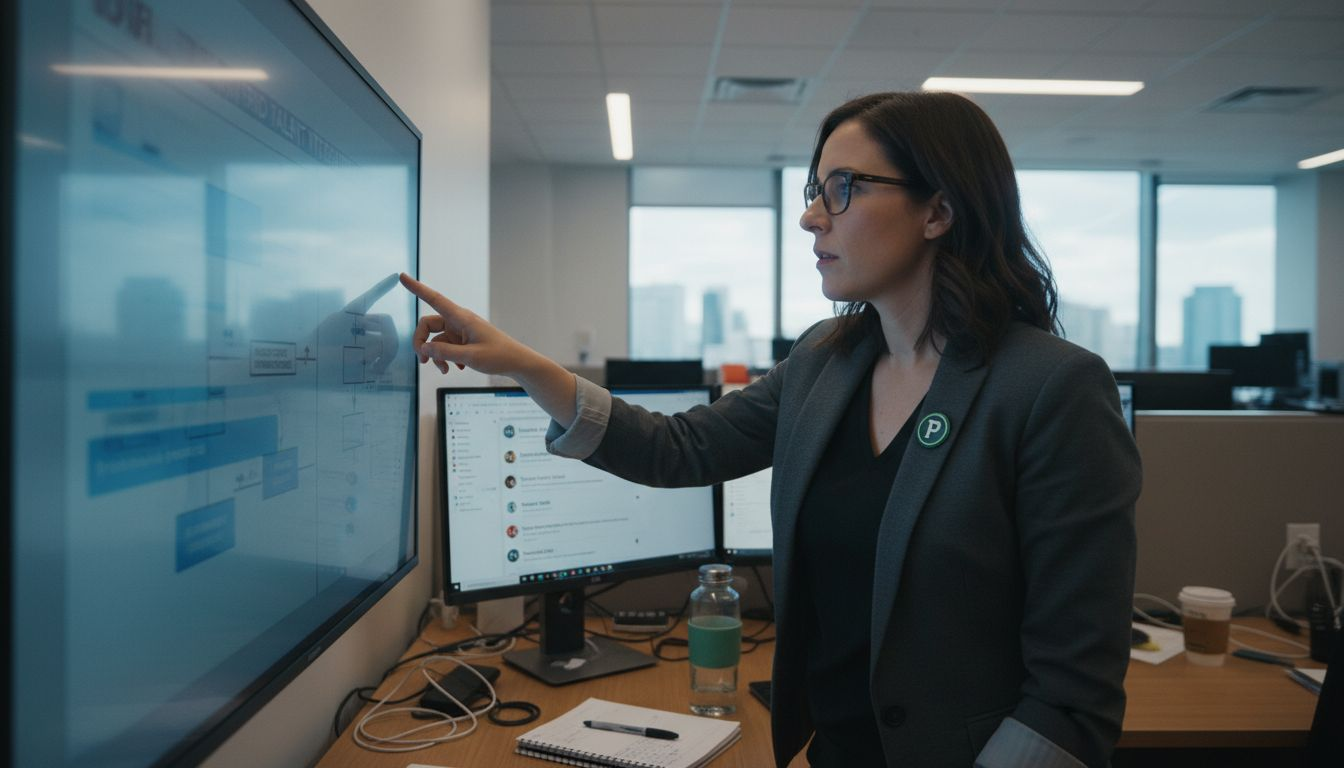
AI-driven human resource technologies are revolutionizing how organizations approach talent management, offering unprecedented insights into workforce optimization. These advanced tools enable precise candidate selection, performance prediction, and strategic talent alignment.
Key steps for implementing AI-driven staffing solutions include:
-
Evaluate current recruitment processes for potential AI integration
-
Research AI staffing platforms compatible with your organizational needs
-
Test machine learning candidate matching algorithms
-
Develop clear AI implementation guidelines
-
Train HR teams on new technological capabilities
AI should enhance human decision-making, not replace critical human judgment in talent acquisition.
Emerging AI trends in staffing demonstrate significant potential across industries like healthcare, finance, and technology. These technologies excel at automating repetitive tasks while preserving the nuanced understanding that human recruiters bring.
Here is a comparison of traditional vs AI-driven staffing solutions:
| Approach | Recruitment Efficiency | Candidate Matching Accuracy | Talent Management Insights |
| Traditional | Manual, time-consuming | Based on resumes/interviews | Limited by subjective judgment |
| AI-Driven | Automated, fast screening | Uses data and predictive models | Delivers data-driven analytics |
Pro tip: Start with pilot programs in specific departments to validate AI staffing solution effectiveness before company-wide rollout.
Step 3: Integrate Hybrid Talent into Existing Workflows
Successfully blending human professionals and AI-driven resources requires strategic planning and a nuanced approach to team collaboration. Your goal is to create a seamless, integrated environment where human expertise and technological capabilities complement each other effectively.

Human-AI Integration Framework research provides critical insights into operationalizing hybrid team collaboration, emphasizing the importance of clear delegation and validation processes. This framework helps organizations optimize workflow integration without disrupting existing team structures.
Key strategies for integrating hybrid talent include:
-
Define clear role boundaries between human and AI team members
-
Establish standardized communication protocols
-
Develop comprehensive onboarding processes for hybrid teams
-
Create performance evaluation metrics that account for AI contributions
-
Implement cross-training programs to enhance mutual understanding
Successful hybrid integration is about creating synergy, not replacing human talent with technology.
Effective hybrid talent integration requires continuous monitoring and adaptive strategies. Regularly assess how AI tools and human professionals interact, looking for opportunities to refine collaboration methods and improve overall team performance.
Pro tip: Conduct periodic collaborative workshops where human team members and AI tools work together on sample projects to identify and resolve potential integration challenges.
Step 4: Implement Collaboration and Communication Tools
Establishing robust digital communication infrastructure is critical for managing hybrid teams effectively. Your goal is to create a seamless technological ecosystem that enables smooth information exchange, transparent workflows, and real-time collaboration across diverse team members.
Digital collaboration tools research demonstrates how strategic platform selection can dramatically improve team productivity and communication effectiveness. The right combination of tools can bridge geographical and technological gaps, ensuring all team members remain connected and aligned.
Key considerations for implementing collaboration tools include:
-
Assess current communication gaps in your existing workflow
-
Evaluate cross-platform compatibility of potential tools
-
Prioritize user-friendly interfaces for seamless adoption
-
Ensure robust security and data protection features
-
Select tools supporting multiple communication formats
Technology should simplify communication, not create additional complexity.
Successful tool implementation requires more than just selecting software. Develop comprehensive onboarding processes, provide training sessions, and create clear guidelines for tool usage to maximize team engagement and minimize potential friction points.
Pro tip: Conduct a 30-day pilot program with a small team to test collaboration tools before full organizational deployment.
Step 5: Monitor Outcomes and Optimize Processes
Transforming team performance requires continuous measurement and strategic refinement of your AI-driven workflow. Your ultimate goal is to create a dynamic, self-improving system that consistently delivers enhanced productivity and meaningful results.
AI-powered performance tracking technologies now enable unprecedented insights into team dynamics, allowing for real-time analysis and rapid optimization of organizational processes. These advanced tools extract complex performance data and translate them into actionable intelligence.
Key strategies for effective outcome monitoring include:
-
Establish clear performance benchmarks before implementation
-
Utilize AI-driven analytics platforms
-
Create regular performance review cycles
-
Track both quantitative and qualitative metrics
-
Develop adaptive improvement protocols
Continuous improvement is about incremental gains, not radical transformations.
AI productivity optimization tools help organizations cut through data complexity, enabling faster decision-making and more focused interventions. By systematically analyzing performance trends, you can identify subtle opportunities for enhancement.
Pro tip: Implement a quarterly review process that combines AI-generated insights with team member feedback to create a comprehensive optimization strategy.
Unlock Your Team’s Full Potential with AI-Powered Staffing Solutions
Struggling with communication gaps, workflow bottlenecks, or integrating hybrid talent as outlined in the article? These are common challenges that stall productivity and slow down progress. At Fuerza, we specialize in connecting US-based enterprises and startups with pre-vetted nearshore and onshore experts who seamlessly blend with your existing teams. Our AI-driven talent matching helps optimize recruitment and workforce performance, addressing the pain points of inefficient processes and resource allocation described in the article.
Take the next step to transform your team by exploring how our innovative staffing solutions deliver faster hiring, smarter candidate matching, and smoother hybrid integrations. Visit Fuerza Work to discover how AI staffing can streamline your talent strategy now. Don’t wait to improve collaboration and boost productivity with proven AI-powered technologies designed for American teams.
Frequently Asked Questions
How can AI staffing solutions improve my team’s productivity?
AI staffing solutions can automate repetitive tasks, enhance candidate matching, and optimize workforce performance. Start by evaluating your current recruitment processes to identify where AI can streamline operations.
What steps should I take to assess my team’s productivity challenges?
Begin by conducting a comprehensive organizational analysis to identify communication gaps, workflow bottlenecks, and resource allocation issues. Use tools like anonymous surveys and performance metrics to gather insights over the next few weeks.
How do I effectively integrate AI into my existing team workflows?
Define clear role boundaries between human team members and AI tools to ensure seamless collaboration. Establish standardized communication protocols and onboarding processes to facilitate integration within the first month.
What should I consider when selecting collaboration tools for hybrid teams?
Evaluate your current communication gaps and prioritize tools that offer cross-platform compatibility and user-friendly interfaces. Aim to implement a pilot program within 30 days to assess tool effectiveness before full deployment.
How can I monitor the outcomes of AI staffing implementations?
Establish clear performance benchmarks and utilize analytics platforms to track both quantitative and qualitative metrics. Set up regular performance review cycles every quarter to make data-driven adjustments and optimize team productivity.