
Expert vetting guide 2026: hire top freelance talent fast
Expert vetting guide 2026: hire top freelance talent fast

Hiring the wrong expert can delay your product timeline by months and waste over $200,000 in compensation and lost productivity. For product and hiring managers at U.S. enterprises and startups, effective vetting is not optional. It’s the difference between agile project success and costly failure. This guide walks you through a proven, step-by-step vetting framework designed specifically for 2026’s competitive talent market, helping you confidently hire freelance and full-time experts who deliver results from day one.
Table of Contents
Understanding The Vetting Challenge: Common Pitfalls And Stakes
Executing Expert Vetting: Step-By-Step Process With Best Practices
Verifying And Finalizing Hires: Identifying Red Flags And Ensuring Fit
Key takeaways
PointDetailsVetting evaluates technical skills, communication, and reliabilityA comprehensive approach reduces hiring risk and accelerates onboarding.Structured rubrics ensure fair candidate assessmentRubrics create transparency and minimize bias across interviews.Staff augmentation reduces time-to-hire and costsPre-vetted talent pools cut weeks from traditional recruiting timelines.Multi-stage vetting identifies red flags earlyScreening, technical tests, and behavioral interviews catch mismatches before offers.Effective vetting significantly reduces hiring failuresProper evaluation lowers the 46% remote hire failure rate.
Understanding the vetting challenge: common pitfalls and stakes
Hiring experts in 2026 remains a high-stakes endeavor. The average PM hiring process takes 4-8 weeks from posting to offer acceptance, and hiring costs range from $130K-$300K+ in annual compensation depending on level. Yet despite these investments, 46% of remote hires fail within 18 months. The wrong hire doesn’t just waste money. It derails product roadmaps, demoralizes teams, and forces you to restart the entire process.
Why do so many hires fail? Most companies focus narrowly on technical skills during vetting, neglecting the communication and reliability checks that predict long-term success. You might land a developer who writes clean code but can’t collaborate with your UX team. Or a product manager who aced the case study but struggles to prioritize under pressure. These gaps emerge because vetting processes lack structure and consistency.
Common pitfalls include:
Over-indexing on resume credentials without validating real-world application
Skipping behavioral interviews that reveal work style and cultural fit
Relying on gut feelings instead of measurable evaluation criteria
Ignoring red flags like vague answers or inconsistent project timelines
Remote and freelance hiring amplifies these challenges. Time zones complicate live interviews. References may be harder to verify across borders. Without a rigorous vetting framework, you risk hiring someone who looks great on paper but can’t deliver in your environment. Understanding these pitfalls is the first step toward building a vetting process that actually works. The next step is preparation.
“Effective vetting isn’t about finding the perfect candidate. It’s about systematically eliminating mismatches before they cost you time and money.”
For teams evaluating PM candidates or technical experts, recognizing these challenges early helps you design a process that surfaces the right signals.
Preparing for vetting: what you need to assess and collect
Before you interview a single candidate, define what success looks like. Start by listing the technical competencies required for the role. A senior developer might need proficiency in specific frameworks, cloud platforms, and API design. A product manager should demonstrate experience with roadmapping tools, stakeholder management, and data-driven decision making. Write these down as measurable criteria, not vague buzzwords.
Soft skills matter just as much. Communication, adaptability, and problem-solving often determine whether an expert thrives or struggles on your team. Most companies primarily focus on technical skills during vetting, often neglecting communication and reliability checks. This oversight leads to hires who can’t collaborate effectively or meet deadlines consistently.
Gather relevant information early in the process:
Detailed project history with specific outcomes and metrics
Portfolio samples or case studies demonstrating problem-solving approach
References from recent clients or managers who can speak to work quality and reliability
Availability and time zone compatibility for remote or freelance roles
For overseas freelancers, verifying references can be tricky. Time zone differences slow communication. Cultural norms around feedback vary. Plan extra time for these checks and consider using video calls to assess communication skills in real time.
Structured rubrics clarify what you’re evaluating and why. A rubric breaks down each competency into observable behaviors with clear scoring criteria. Instead of asking “Is this candidate a good communicator?” you evaluate “Does the candidate explain technical concepts clearly to non-technical stakeholders?” This shift from subjective impressions to measurable behaviors reduces bias and improves consistency across interviewers.

Pro Tip: Create a simple scoring matrix before you start interviewing. List each competency, define what “strong,” “adequate,” and “weak” performance looks like, and assign point values. This takes 30 minutes upfront but saves hours of debate later.
The table below shows key competencies to assess for technical and product roles:
CompetencyTechnical ExpertProduct ManagerCore SkillsFramework proficiency, system designRoadmapping, stakeholder alignmentCommunicationCode documentation, team collaborationCross-functional leadership, customer empathyProblem-SolvingDebugging approach, optimization thinkingPrioritization frameworks, trade-off analysisReliabilityDeadline adherence, code qualityDelivery consistency, accountability
With clear criteria and structured rubrics, you’re ready to execute the vetting process. Preparation ensures you evaluate every candidate fairly and identify the best fit efficiently. Many teams accelerate this phase by leveraging staff augmentation services that provide pre-vetted talent pools.
Executing expert vetting: step-by-step process with best practices
A multi-stage vetting approach minimizes risk and surfaces red flags early. Here’s how to structure each stage for maximum insight:
Resume screen: Review credentials, project history, and role progression. Look for gaps, frequent job changes, or vague descriptions. Flag candidates who meet baseline requirements for the next stage.
Technical screen: Conduct a live coding session, system design discussion, or product case study. Focus on problem-solving process, not just final answers. Ask candidates to explain their reasoning out loud.
Soft skills interview: Use behavioral questions to assess communication, collaboration, and adaptability. Ask for specific examples: “Tell me about a time you had to pivot a project mid-stream. How did you communicate the change to stakeholders?”
Presentation or case study: Assign a realistic scenario that mirrors actual work. Keep it short to respect candidates’ time. Evaluate how they structure their approach, prioritize tasks, and present findings.
Structured rubrics put candidates on a level playing field and help extrapolate talent recommendations. Rubrics measure process quality, task completion, and communication skills using consistent criteria. This standardization reduces interviewer bias and creates auditable hiring records.
Avoid long take-home tests. Candidates with multiple offers often skip assignments that require more than two hours. Instead, use shorter exercises or live problem-solving sessions that respect their time while still revealing critical skills.
Focus on observable behaviors, not gut feelings. Did the candidate ask clarifying questions before diving into the problem? Did they communicate trade-offs clearly? Did they acknowledge gaps in their knowledge honestly? These behaviors predict real-world performance better than polished answers.
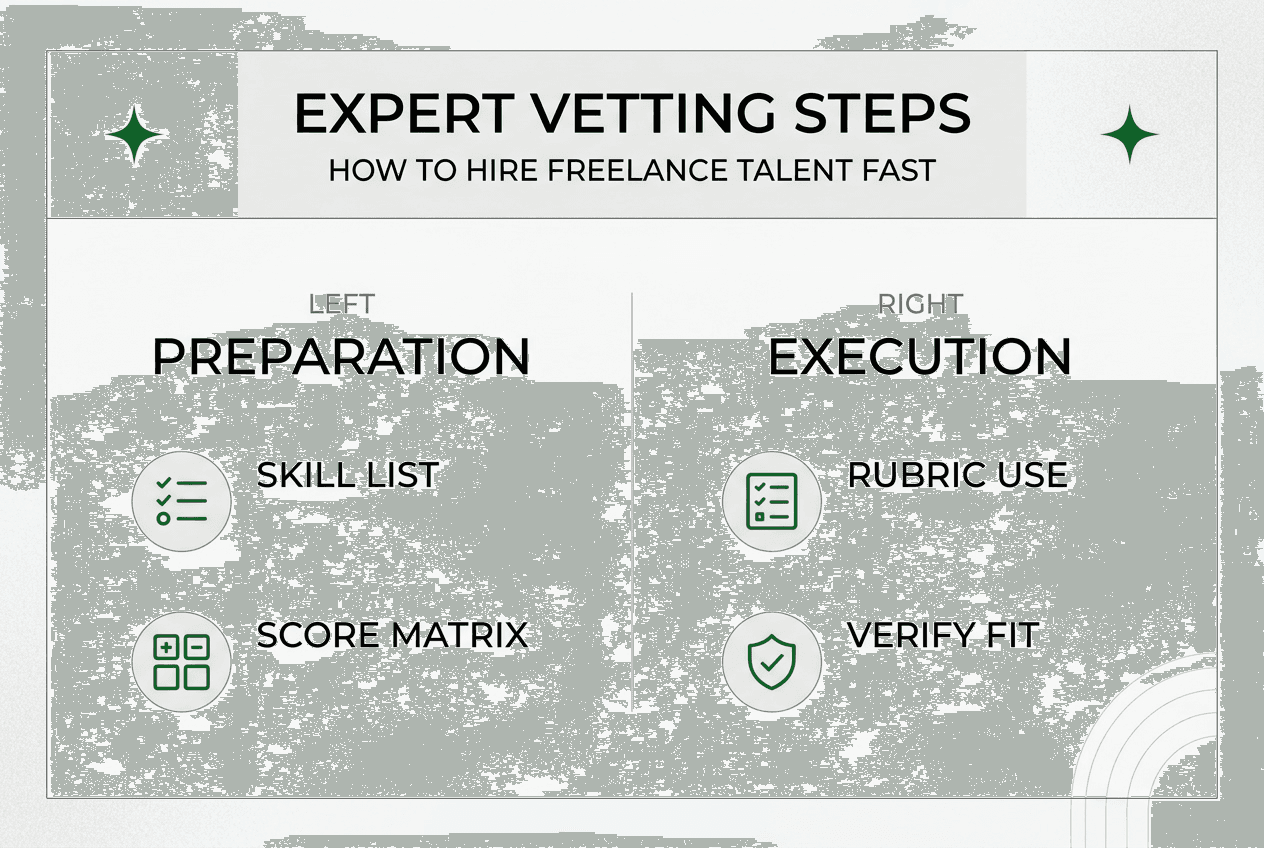
The table below compares traditional screening methods with rubric-based approaches:
AspectTraditional ScreeningRubric-Based VettingEvaluation CriteriaSubjective impressionsMeasurable behaviorsConsistencyVaries by interviewerStandardized across teamBias RiskHighReducedAuditabilityLowHighTime EfficiencyModerateHigh
Pro Tip: Calibrate your interviewers regularly. After each hiring round, review rubric scores and discuss discrepancies. This practice aligns everyone on what “strong” performance looks like and improves consistency over time.
For teams looking to accelerate hiring without sacrificing quality, exploring the timing advantages of staff augmentation can cut weeks from the vetting process by accessing pre-screened talent pools.
Verifying and finalizing hires: identifying red flags and ensuring fit
Once you’ve completed interviews, it’s time to verify claims and finalize your decision. Reference checks are critical. Ask former managers or clients about collaboration style, reliability, and ability to handle feedback. Listen for hesitation or vague responses. Strong references provide specific examples and measurable outcomes.
Red flags include poor collaboration, lack of customer focus, unclear communication. Watch for candidates who blame others for project failures or can’t articulate their specific contributions. Inconsistencies between claimed achievements and reference feedback signal potential mismatches.
Cultural fit matters as much as technical skill. Use scenario-based questions to assess alignment with your team’s values and work style. For example: “Describe how you’d handle a situation where engineering and design disagree on a feature approach.” Strong candidates acknowledge multiple perspectives and propose collaborative solutions.
Key verification steps:
Cross-check portfolio samples with reference feedback on those projects
Confirm availability and start date to avoid last-minute surprises
Review compensation expectations and ensure alignment with budget
Assess long-term career goals to gauge retention likelihood
Rubrics create transparent, auditable hiring records. Document each candidate’s scores, interviewer notes, and final decision rationale. This documentation supports regulatory compliance and helps you refine your process over time.
Plan onboarding before the hire starts. Prepare learning resources, assign a mentor, and schedule regular check-ins for the first 90 days. Early feedback loops help new hires adjust quickly and signal your commitment to their success.
“The best vetting process doesn’t end with the offer letter. It extends into onboarding, where you validate your hiring decision and set the new hire up for long-term success.”
Pro Tip: Document all evaluation signals in a centralized system. This practice not only supports compliance but also helps you identify patterns in successful hires, refining your criteria for future searches.
For companies seeking streamlined access to vetted talent, partnering with expert staffing solutions can reduce vetting overhead while maintaining quality standards.
Why choose Fuerza for your expert hiring needs
Applying this vetting framework takes time and expertise. Fuerza simplifies the process by offering AI-powered staffing that connects you with pre-vetted AI and tech experts ready to meet your agile project needs. Our platform uses structured rubrics and multi-stage evaluations to ensure every candidate meets rigorous standards for technical skill, communication, and reliability.
Staff augmentation through Fuerza reduces your time-to-hire compared to traditional local recruiting. Instead of spending weeks screening resumes and conducting interviews, you access a curated talent pool of nearshore and onshore experts who’ve already passed our comprehensive vetting process. This approach cuts costs, accelerates project timelines, and minimizes hiring risk. Whether you need freelance contractors or full-time hires, Fuerza delivers vetted talent fast. Join the Fuerza waitlist today for early access to our staff augmentation services and start building your team with confidence.
Frequently asked questions
How long does the expert vetting process usually take?
A thorough vetting process typically takes two to four weeks from initial screening to final offer. This timeline includes resume review, technical assessments, behavioral interviews, and reference checks. You can accelerate hiring by using pre-vetted talent pools or staff augmentation services that handle initial screening. Rushing the process increases the risk of bad hires, so balance speed with thoroughness.
What key skills beyond technical ability should I evaluate during vetting?
Communication, problem-solving, and cultural fit predict long-term success as much as technical skills. Assess how candidates explain complex ideas to non-technical stakeholders, handle ambiguity, and collaborate across teams. Structured rubrics help you measure these soft skills consistently. Behavioral interview questions reveal work style and adaptability better than hypothetical scenarios.
How can structured rubrics improve my hiring decisions?
Rubrics standardize evaluation criteria and provide auditable hiring records. They focus on measurable behaviors rather than subjective opinions, reducing interviewer bias and improving consistency. Rubrics also make it easier to compare candidates objectively and justify hiring decisions to stakeholders. Over time, rubric data helps you refine what success looks like for each role.
Are freelance experts harder to vet than full-time hires?
Remote freelancers face unique challenges like time zone differences and harder-to-verify references. Advanced vetting requires tailored approaches, such as video interviews to assess communication skills and portfolio reviews to confirm past work quality. Freelancers often have diverse project experience, so focus on specific outcomes and client feedback. Pre-vetted freelance platforms can simplify this process significantly.
What are red flags I should watch for in interviews?
Watch for poor communication, lack of customer focus, and unclear past results. Candidates who blame others for failures or can’t articulate their specific contributions may struggle on your team. Inconsistencies between claimed achievements and reference feedback signal potential issues. Use multiple vetting stages to confirm concerns before making a final decision.
Recommended
Fuerza — Hire Pre-Vetted AI & Tech Talent | AI-Powered Staffing
Fuerza — Hire Pre-Vetted AI & Tech Talent | AI-Powered Staffing
Fuerza — Hire Pre-Vetted AI & Tech Talent | AI-Powered Staffing
Fuerza — Hire Pre-Vetted AI & Tech Talent | AI-Powered Staffing
myGwork | LGBTQ+ Talent & Hiring Network | Inclusive Jobs & Employers