
Expert hiring best practices for product managers 2026

Hiring managers face a challenge balancing domain expertise with product management skills when building high-performing teams. In competitive 2026 markets, selecting the right expert talent determines project success and team velocity. This guide provides evidence-backed best practices to help you attract, evaluate, and hire pre-vetted experts who drive measurable impact for your organization.
Table of Contents
- 1. Define Clear, Realistic Role Criteria To Attract Qualified Experts
- 2. Prioritize Domain Expertise Versus Product Fundamentals Based On Context
- 3. Streamline The Hiring Process To Reduce Time, Cost, And Candidate Drop-Off
- 4. Craft Candidate Experiences That Reflect Company Impact And Culture To Attract Top Talent
- 5. Compare Hiring Options: Direct Sourcing, Staffing Agencies, And AI-Powered Platforms
Key takeaways
| Point | Details |
|---|---|
| Role clarity attracts better candidates | Precise, realistic job descriptions filter qualified experts and set accurate expectations from day one. |
| Domain expertise varies by context | Prioritize subject matter expertise in specialized industries; emphasize product fundamentals for versatile roles. |
| Streamlined processes reduce costs | Efficient hiring cuts time from 4-8 weeks and saves significant compensation expenses while preventing candidate drop-off. |
| Candidate experience drives acceptance | Top experts assess company impact and culture at every touchpoint, making transparency and professionalism critical. |
| Strategic hiring methods matter | Comparing direct sourcing, agencies, and AI-powered platforms helps you choose the right approach for your needs. |
1. Define clear, realistic role criteria to attract qualified experts
Crafting a crisp role definition is your first line of defense against mismatched hires and wasted interview cycles. Many organizations fall into the trap of creating inflated job descriptions that list unrealistic skill combinations, deterring qualified candidates who recognize impossible expectations. You need precise role criteria that specify core responsibilities, required technical skills, and realistic experience levels tailored to your organization’s stage and product complexity.

Startups typically need generalist product managers comfortable with ambiguity and rapid iteration across multiple domains. Scale-ups require specialists who excel at stakeholder management, process maturity, and navigating organizational complexity. Understanding this distinction prevents you from seeking senior enterprise expertise for early-stage ventures or hiring junior generalists for mature product organizations.
When writing effective role criteria, follow these essential practices:
- Specify 3-5 core responsibilities instead of exhaustive task lists that overwhelm candidates
- Define technical skills genuinely required for day one success, not nice-to-have extras
- State realistic years of experience ranges that match actual role complexity and autonomy
- Clarify reporting structure and decision-making authority to set accurate expectations
- Include specific product domains or industry context when relevant to role success
Avoid these common pitfalls that reduce candidate quality:
- Combining senior IC responsibilities with leadership requirements in single roles
- Listing every tool or methodology trending in product management communities
- Demanding extensive experience in technologies younger than stated tenure requirements
- Using vague language like “rockstar” or “ninja” instead of concrete competencies
Pro Tip: Involve engineering leads, designers, and executives when validating role scope to ensure alignment on priorities and prevent scope creep during hiring. Cross-functional input reveals unrealistic expectations before they reach candidates, and helps you craft expert hiring best practices grounded in actual team needs.
2. Prioritize domain expertise versus product fundamentals based on context
The prominence of hiring for SME knowledge or experience reflects a significant trend reshaping product manager hiring in 2026. Gate-kept industries like mining, gaming, healthcare technology, and AI-based products demand deep subject matter expertise that cannot be acquired through general product training alone. In these contexts, domain knowledge enables product managers to make informed tradeoffs, communicate credibly with technical specialists, and identify opportunities invisible to generalist PMs.
General product fundamentals like roadmapping, prioritization frameworks, and stakeholder communication remain valuable across all contexts. However, you may need to deprioritize broad product skills when hiring for specialized domains where subject matter expertise creates disproportionate value. A product manager building AI models needs machine learning understanding more than they need perfect Agile ceremony execution.
Your hiring emphasis should shift based on these scenarios:
- Emphasize domain expertise when products require regulatory knowledge, technical depth, or specialized user understanding
- Prioritize product fundamentals for horizontal platforms, consumer applications, or rapidly evolving markets
- Seek balanced candidates for enterprise software where both business process knowledge and PM skills matter equally
- Weight domain expertise heavily for technical products where engineering credibility determines influence
- Focus on versatility and learning agility for early-stage startups exploring multiple potential directions
Consider hiring experts in AI sectors where candidates with machine learning backgrounds command premium compensation but deliver breakthrough product insights. An AI product manager who deeply understands model training, bias detection, and inference optimization makes architectural decisions that generalist PMs cannot. Conversely, a consumer mobile app benefits more from a PM with proven growth hacking skills and user psychology knowledge than from deep technical specialization.
Startup roles typically favor versatile candidates who adapt quickly and wear multiple hats across product, marketing, and customer success. Scaling organizations emphasize mature process skills, cross-functional stakeholder management, and the ability to operate within established systems while driving incremental improvements.
3. Streamline the hiring process to reduce time, cost, and candidate drop-off
The average PM hiring process takes 4-8 weeks from posting to offer acceptance, creating significant opportunity costs and candidate attrition risks. The typical PM hiring process costs $130K-$300K+ in annual compensation depending on level, making inefficient hiring an expensive organizational tax. Long, disorganized recruitment cycles lose top candidates to competitors who move faster and communicate better.
| Experience Level | Average Hiring Duration | Typical Annual Compensation | Primary Cost Drivers |
|---|---|---|---|
| Junior PM | 3-5 weeks | $90K-$130K | Interview coordination, assessment design |
| Mid-level PM | 4-6 weeks | $130K-$180K | Stakeholder scheduling, technical evaluations |
| Senior PM | 6-8 weeks | $180K-$250K | Executive interviews, comprehensive case studies |
| Principal/Director | 8-12 weeks | $250K-$350K+ | Multiple interview rounds, extensive reference checks |
Reduce these costs and timelines with strategic process improvements:
- Pre-vet candidates through AI-powered platforms that assess skills before your team invests interview time
- Establish clear communication timelines so candidates know exactly when to expect feedback and next steps
- Consolidate interview rounds to respect candidate schedules while gathering necessary evaluation data
- Use asynchronous assessments for initial screening to reduce coordination overhead and calendar friction
- Empower hiring managers to make offers quickly once consensus emerges instead of waiting for lengthy approval chains
Pro Tip: Treat recruitment as strategic investment in organizational capability, not a transactional hiring event. The quality of your hiring process signals your company’s operational maturity and respect for talent.
“Strategic recruitment optimization delivers measurable ROI through reduced time-to-fill, improved quality-of-hire, and enhanced employer brand reputation in competitive talent markets.”
Understanding expert hiring timing and costs helps you budget appropriately and set realistic expectations with executives who may underestimate the investment required to secure exceptional product talent in 2026 markets.
4. Craft candidate experiences that reflect company impact and culture to attract top talent
Busy candidates assess impact in every interaction, evaluating whether your organization deserves their finite career capital. In today’s competitive markets, every interaction carries outsized weight in shaping candidate perceptions and final decisions. Top experts receive multiple offers simultaneously, making your recruitment experience a decisive competitive differentiator.
Positive, transparent recruitment processes improve employer branding and offer acceptance rates by demonstrating the professionalism and communication quality candidates can expect as employees. You communicate company values through recruiter responsiveness, interviewer preparation, feedback specificity, and decision speed more powerfully than through mission statements or marketing materials.
Create meaningful candidate experiences with these evidence-based approaches:
- Provide detailed interview schedules with interviewer names, roles, and focus areas so candidates prepare effectively
- Share realistic product challenges and organizational context instead of sanitized marketing pitches
- Offer substantive feedback to candidates who reach final rounds, regardless of hiring outcome
- Demonstrate respect for candidate time by starting interviews punctually and ending on schedule
- Connect candidates with potential future colleagues for authentic culture assessment beyond formal interviews
- Align organizational mission and values messaging from first contact through offer stage for consistency
- Give candidates clear insight into how the role impacts company goals and product roadmap
Expert product managers evaluate culture fit as carefully as you assess their skills. They want to understand team dynamics, leadership quality, product strategy clarity, and organizational decision-making processes before committing. Transparency about challenges, growth areas, and realistic expectations builds trust that survives the inevitable difficulties of product development.
Your expert hiring services overview should emphasize candidate experience quality alongside technical vetting capabilities. Organizations that invest in exceptional recruitment experiences attract talent who might otherwise choose competitors offering higher compensation but lower organizational quality.
5. Compare hiring options: direct sourcing, staffing agencies, and AI-powered platforms
Selecting the right hiring approach depends on your timeline urgency, budget constraints, internal recruiting capacity, and quality requirements. Direct sourcing gives you maximum control over candidate pipelines and employer brand messaging but demands significant recruiter time and talent network access. Traditional staffing agencies vary widely in product management expertise and can charge 20-30% of first-year compensation, creating cost barriers for some organizations.
AI-powered platforms provide speed advantages and pre-vetted talent matching that reduces your screening burden while maintaining quality standards. These services combine technology efficiency with human vetting to deliver candidates who meet your specific criteria faster than traditional methods.
| Hiring Method | Cost | Speed | Quality Control | Best For |
|---|---|---|---|---|
| Direct sourcing | Low (internal) | 6-12 weeks | Complete | Large orgs with recruiting teams |
| Traditional agencies | High (20-30%) | 4-8 weeks | Variable | Specialized niche roles |
| AI-powered platforms | Medium (15-20%) | 2-4 weeks | High (pre-vetted) | Fast-growing startups and enterprises |
| Internal referrals | Low | Variable | High | Strong employee networks |
Consider these factors when choosing your hiring approach:
- Use direct sourcing when you have strong employer brand, active talent communities, and dedicated recruiting resources
- Leverage traditional agencies for highly specialized roles requiring niche industry connections and expertise
- Choose AI-powered platforms when speed matters and you need quality candidates without building extensive sourcing infrastructure
- Combine multiple approaches for critical hires where redundancy increases candidate pipeline depth
- Evaluate agency track records in product management specifically, not just general recruiting success
Pro Tip: Combine AI tools with human vetting for best outcomes. Technology excels at initial filtering and skills assessment, while experienced recruiters and hiring managers evaluate culture fit, communication style, and leadership potential that algorithms miss.
AI-powered staffing services deliver particular value for organizations lacking internal recruiting expertise or facing urgent hiring needs that cannot wait for traditional sourcing cycles. The pre-vetting ensures you spend interview time only with candidates who meet your technical and experience requirements.
Hire expert talent faster with Fuerza
Implementing these expert hiring best practices requires the right partners and tools to execute efficiently. Fuerza offers AI-powered staffing that connects you with pre-vetted AI and tech experts who match your specific requirements, cultural values, and project needs. Our platform accelerates your hiring process from weeks to days while ensuring quality through comprehensive technical assessments and behavioral evaluations.
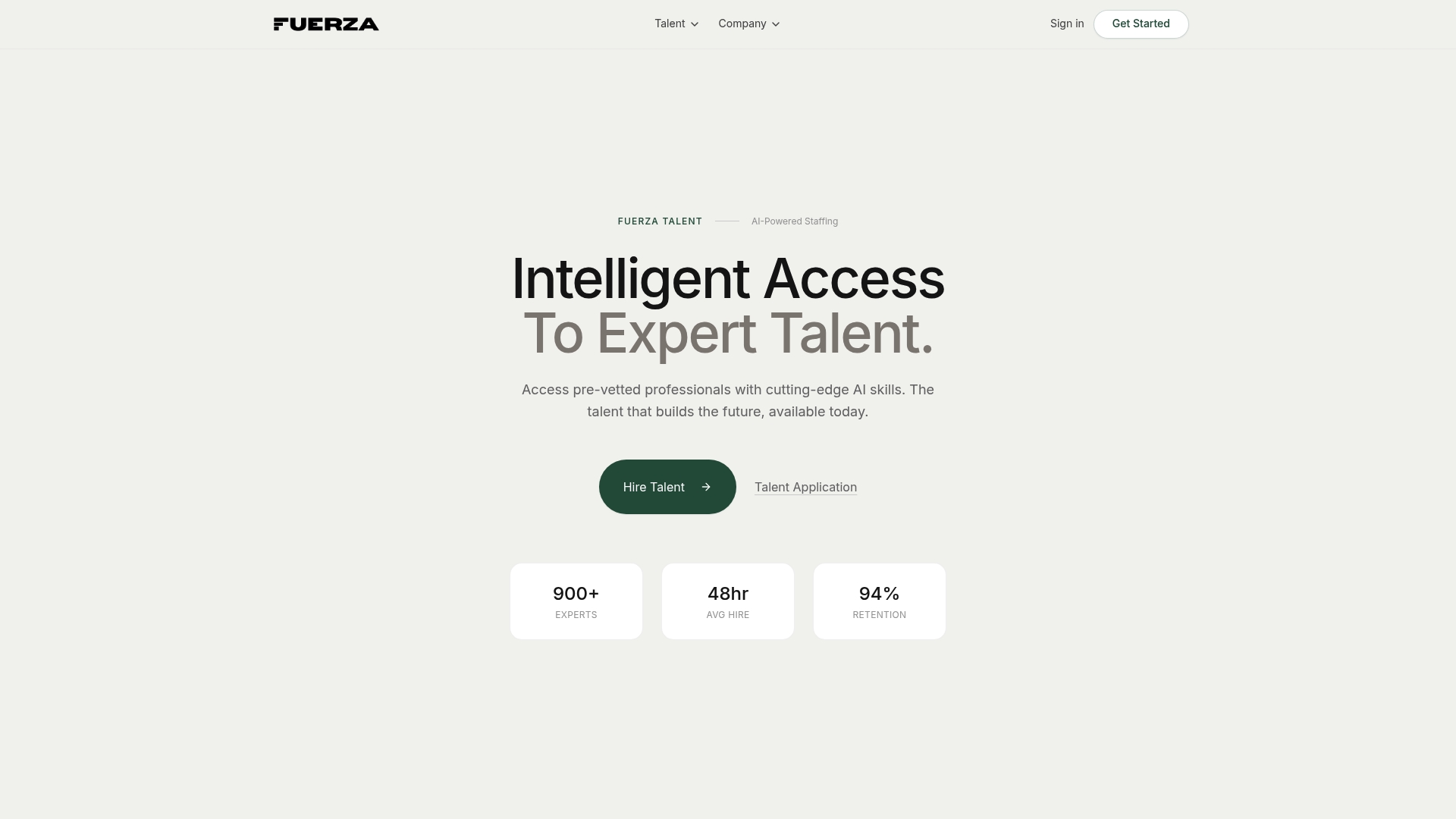
Whether you need freelance specialists for project-based work or full-time product managers for core team expansion, Fuerza’s staffing services provide flexible solutions tailored for startups and enterprises. Our nearshore and onshore talent pool gives you access to exceptional product managers in compatible time zones who integrate seamlessly with US-based teams. Explore Fuerza’s pre-vetted talent today and transform your expert hiring from a bottleneck into a competitive advantage.
Frequently asked questions about expert hiring best practices
What are the biggest challenges in hiring pre-vetted experts?
The primary challenges include balancing domain expertise with general product skills, managing lengthy hiring timelines that lose top candidates, and creating candidate experiences that compete effectively in tight talent markets. Organizations also struggle with realistic role definition and choosing optimal hiring methods for their specific constraints.
How can inflated job descriptions affect expert recruitment?
Inflated job descriptions deter qualified candidates who recognize unrealistic skill combinations and interpret them as signals of organizational dysfunction or unreasonable expectations. They attract less experienced applicants who overestimate their qualifications while repelling seasoned experts who avoid roles with impossible requirements.
What role does domain expertise play in hiring product managers?
Domain expertise becomes critical in gate-kept industries like healthcare, AI, gaming, and regulated sectors where subject matter knowledge enables better decisions and stakeholder credibility. For horizontal platforms and consumer applications, general product fundamentals often deliver more value than specialized industry knowledge.
How long does it typically take to hire an expert product manager?
The average hiring process takes 4-8 weeks from job posting to offer acceptance, with senior and principal-level roles extending to 8-12 weeks due to additional interview rounds and executive involvement. AI-powered platforms can reduce this timeline to 2-4 weeks through pre-vetted candidate pools.
What is the cost range for hiring senior product management talent?
Senior product managers typically command $180K-$250K annually, while principal and director-level roles range from $250K-$350K+ depending on location, industry, and company stage. These figures exclude recruiting fees, which add 15-30% for agency placements, making total hiring costs substantial.
Why does candidate experience matter in expert recruitment?
Top product managers evaluate organizational quality through every recruitment interaction, using hiring process professionalism as a proxy for company operational maturity. Positive experiences improve offer acceptance rates and employer brand reputation, while poor experiences drive candidates to competitors regardless of compensation offers.
Recommended
- Fuerza — Hire Pre-Vetted AI & Tech Talent | AI-Powered Staffing
- Fuerza — Hire Pre-Vetted AI & Tech Talent | AI-Powered Staffing
- Fuerza — Hire Pre-Vetted AI & Tech Talent | AI-Powered Staffing
- Fuerza — Hire Pre-Vetted AI & Tech Talent | AI-Powered Staffing
- IT Sales Team Mastery: Build, Scale, and Optimize Your Tech Sales Department - Sales Label IT Consulting