
7 Key Examples of AI in HR to Boost Recruitment Success

Sorting through stacks of resumes and keeping candidates engaged can overwhelm any hiring team. Finding the perfect match for a job often feels like searching for a needle in a haystack, and manual processes make it even harder. The recruitment process is filled with tasks that waste valuable time and open the door to subjective judgments and missed opportunities.
This list reveals how artificial intelligence is reshaping recruitment, making it faster, more accurate, and more candidate-friendly. You will discover actionable methods backed by research that overcome these familiar hurdles and transform how you approach hiring. Get ready for powerful insights that promise smarter screening, real-time communication, precise matching, and even fairer hiring decisions.
Table of Contents
- 1. Automated Resume Screening for Faster Vetting
- 2. AI-Powered Chatbots for Candidate Engagement
- 3. Intelligent Matching for Job Fit Precision
- 4. Predictive Analytics for Talent Acquisition
- 5. AI Tools for Diversity and Bias Reduction
- 6. Automated Interview Scheduling and Assessment
- 7. Data-Driven Insights for Workforce Planning
Quick Summary
| Key Insight | Clarification |
|---|---|
| 1. Automate Resume Screening | Leveraging AI significantly reduces time and improves candidate evaluation accuracy during the hiring process. |
| 2. Implement AI Chatbots | Utilizing chatbots enhances candidate engagement by providing quick, personalized support throughout recruitment. |
| 3. Leverage Intelligent Job Matching | Advanced algorithms improve hiring accuracy by matching candidates to roles based on true skill compatibility. |
| 4. Use Predictive Analytics | Data-driven insights allow organizations to anticipate hiring needs and align resources strategically. |
| 5. Address Bias with AI Tools | AI can reduce unconscious bias in recruitment, promoting fairer and more inclusive hiring practices. |
1. Automated Resume Screening for Faster Vetting
AI-powered resume screening is transforming how HR teams evaluate job candidates quickly and accurately. By leveraging advanced machine learning techniques, companies can now automate the time-consuming task of resume review with unprecedented precision.
Traditional resume screening methods often involve manual sorting and subjective assessments that can take hours or even days. However, modern AI-driven screening technologies are changing this landscape by using sophisticated natural language processing algorithms to parse and evaluate candidate documents.
Research shows that transformer-based deep learning models like BERT and GPT can dramatically improve candidate matching processes. These advanced systems create detailed “embeddings” or mathematical representations of resumes and job descriptions, enabling semantic comparisons that go far beyond simple keyword matching.
Key benefits of automated resume screening include:
- Dramatically reduced screening time
- More objective candidate evaluation
- Improved matching accuracy
- Elimination of human bias
- Scalable recruitment processes
The technical approach involves several sophisticated steps:
- Extract skills and keywords from resumes
- Generate feature vectors representing candidate profiles
- Calculate semantic similarity between resume and job description
- Rank and prioritize top candidates automatically
Companies implementing these natural language processing approaches can expect significant improvements in recruitment efficiency. By automating initial screening, HR teams can focus on high-value interactions with top candidates.
Automated resume screening transforms recruitment from a manual, time-consuming process into a data-driven, efficient strategy.
Pro tip: Start by piloting AI resume screening with a small batch of applications to understand its nuanced performance and gradually expand your implementation.
2. AI-Powered Chatbots for Candidate Engagement
AI chatbots are revolutionizing recruitment communication by providing instant, personalized interactions that transform candidate engagement. These intelligent digital assistants are changing how companies connect with potential talent.
Large language models now enable chatbots to understand and respond to complex candidate queries with remarkable accuracy. Unlike traditional communication channels, these AI-powered tools can provide 24/7 support throughout the recruitment process.
Personalized interactive support allows chatbots to guide candidates through multiple stages of recruitment. They can answer questions, provide application status updates, and even schedule interviews autonomously.
Key advantages of AI recruitment chatbots include:
- Immediate response to candidate inquiries
- Consistent communication experience
- Reduced administrative workload
- Enhanced candidate satisfaction
- Lower recruitment processing times
The technical implementation involves several strategic steps:
- Train chatbot on company-specific recruitment processes
- Integrate with existing applicant tracking systems
- Configure natural language processing capabilities
- Establish clear communication protocols
- Continuously refine chatbot responses
Chatbot applications in recruitment demonstrate significant improvements in candidate accessibility and communication efficiency.
AI chatbots transform recruitment from a one-way communication model to an interactive, responsive engagement platform.
Pro tip: Implement AI chatbots gradually by starting with a limited set of common candidate questions and progressively expanding their conversational capabilities.
3. Intelligent Matching for Job Fit Precision
Intelligent job matching represents a quantum leap in recruitment technology. By leveraging advanced machine learning algorithms, companies can now connect candidates with roles that align perfectly with their skills and potential.
Artificial intelligence has transformed traditional job matching from a manual guessing game into a precise scientific process. Instead of relying on keyword matching or subjective assessments, modern systems create sophisticated semantic profile comparisons.
AI-powered job recommendation systems analyze candidate profiles using natural language processing to evaluate nuanced skill compatibility. These intelligent platforms go beyond surface-level qualifications to understand deeper professional dynamics.
Key advantages of intelligent job matching include:
- Unprecedented matching accuracy
- Reduced hiring mismatches
- Faster candidate selection
- Enhanced candidate experience
- Lower recruitment costs
The technical approach involves complex steps:
- Create detailed candidate skill embeddings
- Generate job description feature vectors
- Calculate semantic similarity scores
- Rank potential candidate matches
- Provide contextual recommendations
Contrastive learning techniques have dramatically improved job fit assessments by generating dense candidate and job profile representations.
Intelligent matching transforms recruitment from a probability-based process to a precision-driven science.
Pro tip: Continuously update your AI matching models with feedback from successful placements to improve long-term recommendation accuracy.
4. Predictive Analytics for Talent Acquisition
Predictive analytics is revolutionizing talent acquisition by transforming raw data into strategic recruitment insights. Machine learning algorithms now enable HR teams to forecast hiring needs with unprecedented accuracy.
Data-driven recruitment strategies leverage complex machine learning models to analyze historical hiring patterns and predict future talent requirements. These sophisticated systems go beyond traditional reactive hiring approaches.
AI-driven predictive analytics help organizations anticipate talent gaps and proactively develop recruitment strategies. By understanding potential workforce dynamics organizations can stay ahead of competitive talent markets.
Key advantages of predictive analytics in recruitment include:
- More accurate hiring forecasts
- Reduced recruitment cycle times
- Lower hiring costs
- Minimized candidate selection bias
- Enhanced workforce planning
The technical implementation involves strategic steps:
- Collect comprehensive workforce data
- Build machine learning prediction models
- Identify potential talent trends
- Generate actionable recruitment recommendations
- Continuously refine predictive algorithms
Machine learning algorithms are particularly effective at identifying high-potential candidates and predicting employee performance trajectories.
Predictive analytics transforms recruitment from a reactive process to a strategic, forward-looking approach.
Pro tip: Start with small predictive models focusing on specific recruitment metrics and gradually expand your analytics capabilities as you gain confidence in the results.
5. AI Tools for Diversity and Bias Reduction
Artificial intelligence is emerging as a powerful tool for promoting fairness and reducing unconscious bias in recruitment processes. By leveraging advanced algorithms organizations can create more equitable and inclusive hiring strategies.
Algorithmic fairness techniques help eliminate human prejudices that traditionally impact candidate selection. These sophisticated AI tools analyze recruitment data through an objective lens removing subjective interpretations that can inadvertently discriminate.
Diversity and equity management requires a strategic approach that combines technological innovation with human oversight. AI tools can standardize evaluation processes while maintaining transparency and accountability.
Key benefits of AI diversity tools include:
- Objective candidate assessment
- Reduced unconscious hiring bias
- Increased workforce representation
- More inclusive recruitment processes
- Data-driven diversity metrics
The implementation strategy involves critical steps:
- Audit existing recruitment algorithms
- Develop bias detection mechanisms
- Create diverse training datasets
- Implement continuous monitoring
- Enable human oversight and intervention
Successful AI bias reduction requires a comprehensive approach that balances technological capabilities with ethical considerations.
AI diversity tools transform recruitment from a potentially biased process to an objective talent selection strategy.
Pro tip: Regularly validate your AI recruitment tools with diverse panels and update algorithms to ensure ongoing fairness and inclusivity.
6. Automated Interview Scheduling and Assessment
AI technologies are revolutionizing recruitment by transforming complex interview processes into streamlined intelligent experiences. Automated scheduling and assessment tools eliminate administrative burdens while enhancing candidate evaluation precision.
Intelligent interview management systems leverage advanced technologies to coordinate scheduling complex candidate interactions with unprecedented efficiency. These sophisticated platforms integrate multiple assessment modules to create comprehensive candidate evaluation frameworks.
AI-enabled interview evaluation combines technical testing natural language processing and computer vision to provide objective candidate assessments. By automating traditionally manual processes HR teams can focus on strategic talent selection.
Key advantages of automated interview technologies include:
- Dramatically reduced scheduling times
- Consistent candidate evaluation
- Objective assessment metrics
- Enhanced candidate experience
- Lower recruitment administrative costs
The implementation strategy involves critical steps:
- Select appropriate AI interview platforms
- Configure assessment criteria
- Train HR teams on platform capabilities
- Develop integration with existing systems
- Establish continuous performance monitoring
Interview scheduling automation represents a significant leap forward in recruitment efficiency technology.
Automated interview tools transform recruitment from a time-consuming process to a precise data-driven strategy.
Pro tip: Test automated interview platforms with a small candidate group first and gather feedback to refine your assessment approach.
7. Data-Driven Insights for Workforce Planning
Artificial intelligence is transforming workforce planning from a reactive process to a strategic predictive capability. Modern organizations now leverage data-driven insights to anticipate talent needs and align human resources with business objectives.
Strategic workforce intelligence enables companies to navigate complex economic landscapes by understanding talent dynamics before they become critical challenges. These advanced analytical approaches provide unprecedented visibility into organizational capabilities and potential skill gaps.
Workforce planning optimization integrates sophisticated machine learning algorithms to create comprehensive talent strategies. By analyzing historical performance patterns and emerging market trends organizations can make proactive human capital decisions.
Key benefits of data-driven workforce planning include:
- Improved talent acquisition strategies
- Enhanced resource allocation
- Precise skills gap identification
- Reduced recruitment costs
- Increased organizational agility
The implementation process involves critical steps:
- Collect comprehensive workforce data
- Develop predictive analytical models
- Identify skill development requirements
- Create targeted recruitment strategies
- Continuously monitor and adjust plans
Strategic workforce planning tools help organizations address economic uncertainties through intelligent talent management.
Data-driven workforce planning transforms human resources from an administrative function to a strategic business partner.
Pro tip: Invest in cross-functional data integration to ensure your workforce planning models capture holistic organizational insights.
Below is a comprehensive table summarizing the innovative applications of AI technologies in recruitment and HR processes as discussed in the article.
| AI Technology Application | Core Features and Methods | Advantages and Outcomes |
|---|---|---|
| Automated Resume Screening | Utilizes machine learning for parsing and evaluating resumes by semantic similarity. | Reduces screening time, enhances matching accuracy, and mitigates recruitment bias. |
| AI-Powered Chatbots | Engages with candidates via instant responses using large language models. | Increases engagement, provides consistent communication, and reduces administrative effort. |
| Intelligent Job Matching | Matches candidates with positions based on advanced algorithms and job fit analysis. | Improves precision in hiring, reduces mismatches, and enhances candidate satisfaction. |
| Predictive Analytics | Analyzes historical and current data for strategic recruitment forecasting. | Optimizes hiring processes, identifies talent gaps, and lowers recruitment costs. |
| Diversity and Bias Reduction | Applies algorithmic fairness in screening to promote inclusivity. | Supports equitable evaluations, enhances representation, and achieves ethical hiring standards. |
| Automated Interview Scheduling and Assessment | Enhances interview arrangements and evaluation metrics using technology. | Streamlines scheduling, ensures consistent assessments, and saves administrative resources. |
| Data-Driven Workforce Planning | Uses predictive modeling for strategic workforce management. | Anticipates talent needs, allocates resources effectively, and minimizes skills shortages. |
Accelerate Your Recruitment Success with AI-Powered Staffing Solutions
The article highlights critical challenges such as lengthy resume screening, unbiased candidate evaluation, and intelligent job matching that many HR teams face today. These pain points slow down recruitment and affect hiring quality. At Fuerza, we understand your need to transform recruitment into a fast, data-driven, and inclusive process by leveraging AI technologies that streamline candidate vetting and engagement with precision.
Our platform connects you with pre-vetted experts—whether freelancers, full-time employees, or contractors—focusing on Nearshore and Onshore resources tailored for US clients. By combining intelligent candidate matching and automated screening, Fuerza helps you eliminate recruitment bottlenecks while ensuring the best talent fit for your enterprise or startup teams.
Discover how our AI-powered staffing solutions can empower your recruitment strategy with faster hiring, reduced bias, and enhanced candidate experience. Explore more about our approach to efficient candidate vetting and start building your high-performing team today.
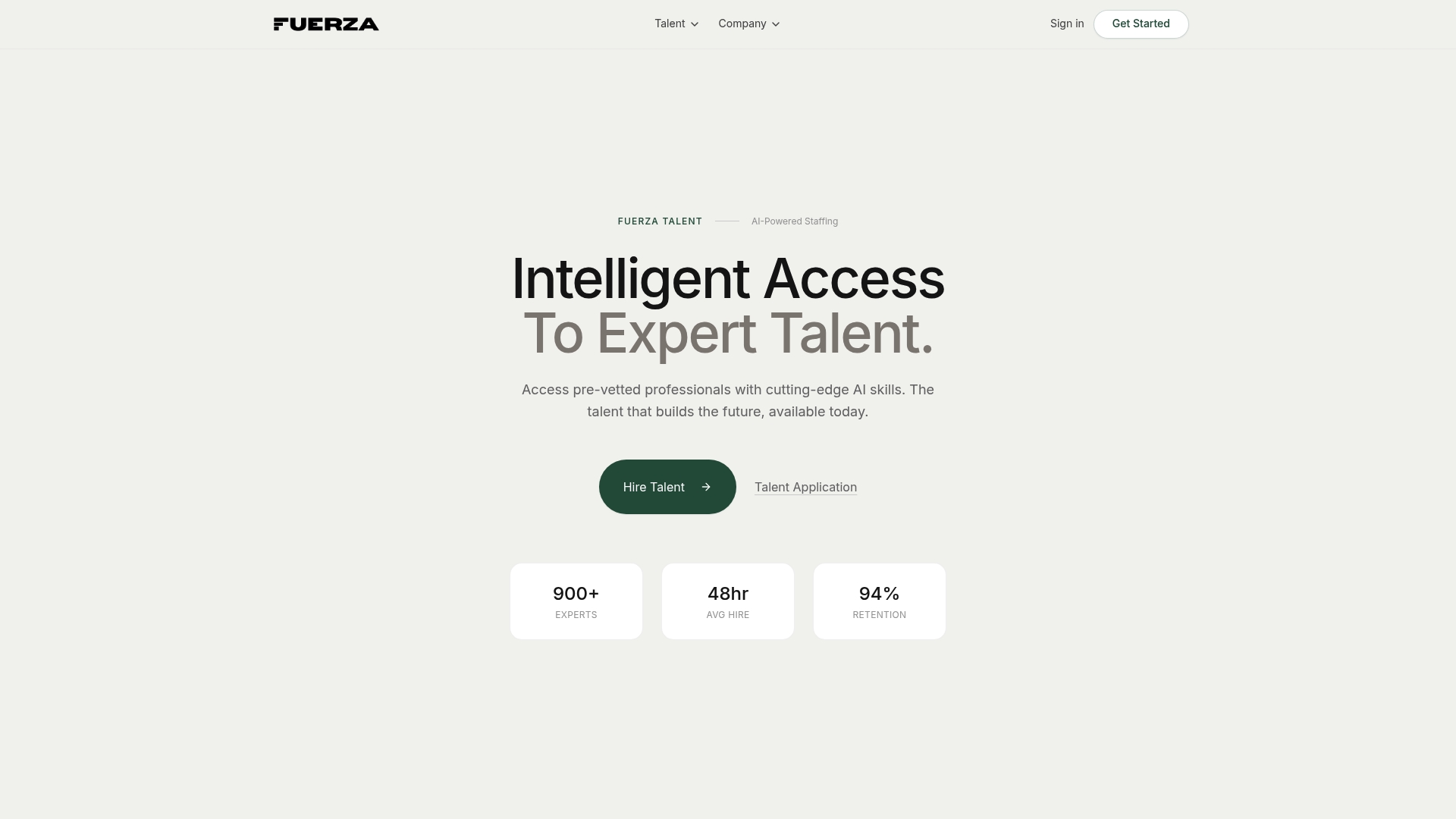
Why wait to harness the power of AI in recruiting? Visit Fuerza to connect with top experts and accelerate your talent acquisition now.
Frequently Asked Questions
How does automated resume screening improve recruitment efficiency?
Automated resume screening reduces the time spent reviewing applications by leveraging AI technology to quickly parse and evaluate resumes. By implementing this system, HR teams can decrease screening times from days to hours, allowing more focus on high-value candidate interactions.
What are the benefits of using AI-powered chatbots during the recruitment process?
AI-powered chatbots enhance candidate engagement by providing instant responses to inquiries and status updates. By incorporating chatbots, companies can improve candidate satisfaction and reduce administrative workloads, resulting in a more streamlined recruitment workflow.
How can intelligent job matching enhance the candidate experience?
Intelligent job matching uses AI algorithms to connect candidates with roles that align with their skills, increasing the likelihood of job fit. By adopting this technology, organizations can reduce hiring mismatches and improve the overall experience for both candidates and hiring teams.
What role do predictive analytics play in talent acquisition?
Predictive analytics help HR teams anticipate future hiring needs based on historical data trends. By utilizing these insights, companies can implement proactive recruitment strategies, thereby minimizing hiring costs and improving workforce planning accuracy.
How can organizations ensure their AI tools promote diversity and reduce bias?
Organizations can use AI diversity tools to standardize their recruitment processes and minimize unconscious bias. By auditing existing recruitment algorithms and continually monitoring outcomes, companies can create a more equitable hiring environment.
What steps can I take to implement automated interview scheduling in my recruitment process?
To implement automated interview scheduling, select an appropriate AI interview platform and configure assessment criteria that fit your needs. Start by training your HR teams on the platform’s capabilities, which can help to significantly reduce administrative scheduling times.