
Examples of enterprise teams that drive success in 2026

Selecting the right team structure can make or break your enterprise’s ability to deliver value at scale. With 74% of organizations using hybrid agile models in 2026, the question isn’t whether to structure teams intentionally but which proven models best fit your context. This article examines real enterprise team examples, from Team Topologies implementations to product pods and AI-native structures, comparing their strengths and trade-offs. You’ll gain practical insights to inform your team design decisions and drive measurable outcomes in collaboration, delivery speed, and innovation.
Table of Contents
- Understanding Criteria For Effective Enterprise Teams
- Team Topologies Framework: Four Team Types Powering Enterprises
- Other Notable Enterprise Team Models And Success Stories
- Comparing Enterprise Team Models: Selecting What Fits Your Organization
- How Fuerza Supports Your Enterprise Team Building In 2026
Key takeaways
| Point | Details |
|---|---|
| Team Topologies dominates modern enterprises | The framework organizes teams by flow and cognitive load, with proven success at companies like Capra Consulting |
| Spotify Model requires cultural alignment | Autonomy-focused squads and tribes sound appealing but often fail when copied without the underlying culture |
| Real examples demonstrate measurable ROI | 7-Eleven saved 13M+ associate hours yearly with product pods, while Pirate Ship improved flow through stream-aligned teams |
| Hybrid models outperform pure frameworks | Custom agile approaches better accommodate enterprise complexity than rigid adherence to single methodologies |
| AI-native roles reshape team composition | Prompt engineers and context specialists accelerate prototyping cycles and enhance documentation quality |
Understanding criteria for effective enterprise teams
Before diving into specific examples, you need clear criteria to evaluate team structures. The most successful enterprises in 2026 prioritize several key factors when designing their teams. First, small cross-functional teams of 6-12 people with outcome focus consistently outperform larger groups optimizing for velocity alone. These compact units maintain focus while bringing diverse skills to solve complex problems.
Cognitive load management has emerged as a critical consideration. When teams juggle too many domains, systems, or technologies, quality suffers and burnout increases. Value stream alignment matters equally, ensuring each team owns a clear slice of customer value from concept to delivery. This reduces handoffs and enables faster feedback loops.
The data reveals a significant shift in how organizations scale agile practices. Only 13% have Agile deeply embedded, while the vast majority adapt frameworks to their unique constraints. Pure implementations of SAFe, LeSS, or Scrum@Scale rarely survive contact with enterprise reality. Instead, successful companies cherry-pick principles and customize ruthlessly.
When evaluating team structures, consider these essential criteria:
- Team size enables both deep focus and sufficient skill diversity
- Clear ownership of outcomes rather than outputs or activity metrics
- Cognitive load stays within manageable bounds for sustainable pace
- Value stream alignment minimizes dependencies and handoffs
- Interaction patterns between teams are explicitly designed, not accidental
Exploring enterprise team service models can help you understand how different structures map to your organization’s specific needs and constraints.
Team Topologies framework: four team types powering enterprises
The Team Topologies framework has become the go-to approach for enterprises serious about optimizing team structures in 2026. It defines four fundamental team types, each with distinct responsibilities and interaction patterns. Stream-aligned teams focus on a single value stream, delivering features directly to customers. Platform teams provide internal services that stream-aligned teams consume as products. Enabling teams help others overcome obstacles and adopt new technologies. Complicated-subsystem teams handle specialized domains requiring deep expertise.
What makes this framework powerful is its emphasis on team interactions. Instead of leaving collaboration to chance, Team Topologies defines three interaction modes: collaboration for discovery, X-as-a-Service for clear consumption, and facilitating for capability building. These patterns reduce cognitive overload and create predictable workflows.
Capra Consulting grew to 100 employees by reorganizing from traditional hierarchy to a network structure based on Team Topologies principles. They reported higher employee engagement and clearer accountability. The shift enabled teams to self-organize around client value streams while maintaining necessary coordination through well-defined interaction modes.

The framework’s modularity appeals to enterprises managing complex product portfolios. You can apply it incrementally, starting with a single value stream before expanding. Platform teams emerge naturally as multiple stream-aligned teams identify shared needs. This organic growth pattern feels less disruptive than big-bang reorganizations.
Pro Tip: Map your value streams before assigning teams. Identify where customer value flows from idea to production, then align teams to minimize handoffs across organizational boundaries. This single step often reveals hidden dependencies and opportunities to simplify your structure.
Successful implementations share common traits. They invest in training teams on the framework concepts rather than just announcing new org charts. They make team types and interaction modes visible through documentation and tooling. They measure flow metrics like lead time and deployment frequency to validate that the new structure actually improves delivery.
For organizations exploring this approach, case studies demonstrate how different industries adapt the framework to their constraints. The key is understanding the underlying principles rather than copying surface-level structures. Your team topologies talent approach should align with the team types you establish, ensuring you hire for the right mix of skills and mindsets.
Other notable enterprise team models and success stories
While Team Topologies gains traction, other models continue influencing enterprise team design. The Spotify Model uses squads, tribes, chapters, and guilds to balance autonomy with alignment. Squads act as mini-startups owning specific features, tribes group related squads, chapters connect people with similar skills across squads, and guilds facilitate knowledge sharing. The model sounds elegant but has limitations when organizations copy the structure without Spotify’s unique culture of trust and experimentation.
Pirate Ship Software provides a compelling turnaround story. The company restructured from overloaded teams to stream-aligned units, dramatically improving flow and planning accuracy. Before the change, teams struggled with context switching and unclear priorities. After realigning around customer journeys, they reduced cognitive load and accelerated delivery cycles. The transformation required difficult conversations about team boundaries and ownership, but the payoff in team morale and output justified the effort.
Perhaps the most impressive example comes from retail. 7-Eleven shifted to product pods for their store systems, saving over 13 million associate hours annually. Product pods combine developers, designers, and product managers focused on specific store capabilities like inventory management or customer checkout. This structure replaced siloed functional teams that required extensive coordination for even minor changes. The pods own their domains end to end, from conception through production support.
Pro Tip: Don’t copy team structures from other companies, even successful ones. Instead, extract the principles that made them work, like clear ownership, manageable cognitive load, or explicit interaction patterns, then adapt those principles to your organizational culture and technical landscape.
Here’s how these models compare across key dimensions:
| Model | Primary Focus | Best For | Common Challenge |
|---|---|---|---|
| Team Topologies | Flow and cognitive load | Complex product portfolios | Requires significant upfront mapping |
| Spotify Model | Autonomy and alignment | Innovation-driven cultures | Fails without trust and experimentation norms |
| Product Pods | End-to-end ownership | Customer-facing applications | Can create silos without cross-pod collaboration |
| Traditional Functional | Specialization depth | Stable, predictable domains | Slow delivery due to handoffs |
The pattern across successful implementations is clear. Teams need clear boundaries, manageable scope, and explicit ways to interact with other teams. Whether you call them squads, pods, or stream-aligned teams matters less than ensuring they have the autonomy and support to deliver value. Organizations exploring hybrid agile team models often blend elements from multiple frameworks to create something uniquely suited to their needs.
Comparing enterprise team models: selecting what fits your organization
Choosing the right team structure requires matching model characteristics to your organizational context. AI-native teams add roles like prompt engineers and context specialists, fundamentally changing how product teams operate in 2026. These specialists enhance prototyping speed and documentation quality, but they require new interaction patterns with traditional engineering roles.
Here’s a detailed comparison to guide your selection:
| Factor | Team Topologies | Spotify Model | Product Pods | AI-Native Teams |
|---|---|---|---|---|
| Scalability | Excellent for 50-500+ teams | Works best under 200 people | Scales well with clear product boundaries | Still emerging, proven at startup scale |
| Autonomy Level | High within stream, structured interactions | Very high, requires cultural maturity | High within pod scope | Extremely high for rapid experimentation |
| Cognitive Load Management | Explicit design principle | Implicit through small squads | Managed through clear ownership | Reduced via AI augmentation |
| Cultural Fit | Works with various cultures if principles adopted | Requires trust and experimentation norms | Fits customer-centric cultures | Needs comfort with AI tooling |
When deciding which model to adopt, consider these critical factors:
- Your current organizational size and growth trajectory over the next 2-3 years
- Existing cultural norms around autonomy, accountability, and cross-functional collaboration
- Technical architecture and whether it enables or constrains team independence
- Leadership’s willingness to invest in the transition and support new interaction patterns
- Availability of talent with skills matching your chosen structure’s requirements
Most enterprises in 2026 don’t adopt a single model wholesale. Instead, they combine elements strategically. You might use Team Topologies to organize your core platform while running innovation teams as autonomous squads. Or you could structure customer-facing teams as product pods while maintaining functional teams for specialized domains like security or data engineering.
The key is intentionality. Random team structures emerge when you don’t actively design them, and they rarely optimize for flow or cognitive load. Whatever model you choose, make the team types, boundaries, and interaction modes explicit. Document them, train people on them, and measure whether they’re actually improving delivery outcomes.
Understanding enterprise team timing strategies helps you sequence the transition and avoid disrupting critical delivery commitments during your reorganization.
How Fuerza supports your enterprise team building in 2026
Designing the right team structure is only half the battle. You also need the right talent to fill those teams with people who understand modern collaboration patterns and can thrive in outcome-focused environments. Fuerza’s AI-powered staffing platform connects you with pre-vetted experts who fit stream-aligned teams, product pods, or whatever structure you’ve chosen.
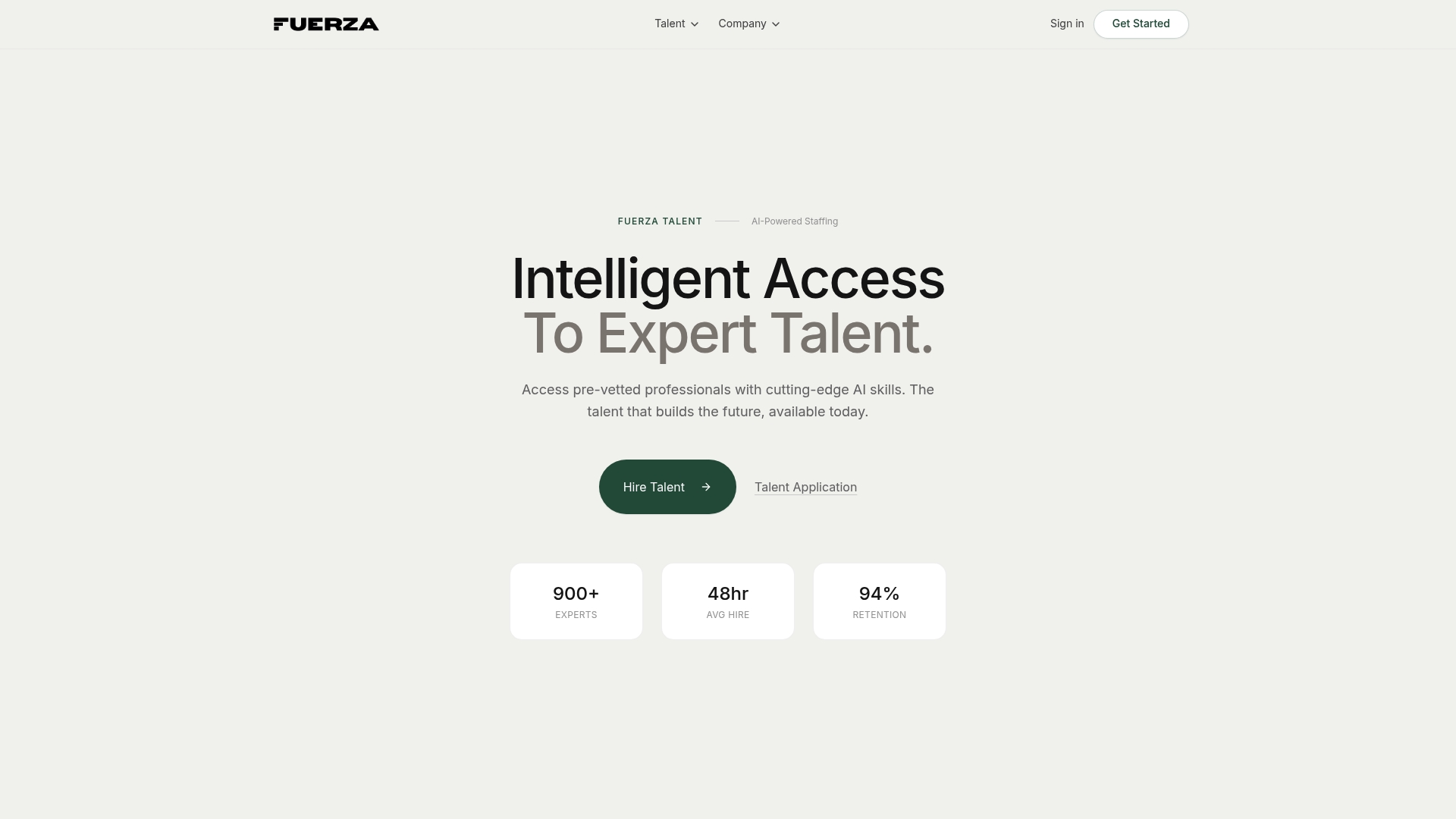
Our vetting process goes beyond technical skills to assess collaboration style, autonomy readiness, and cultural fit. Whether you need nearshore developers for a platform team or onshore specialists for an enabling team, we match you with talent that accelerates your team’s effectiveness. Explore our staffing services for enterprises to see how we support different team models, or browse our pre-vetted AI and tech talent to find experts who can hit the ground running in your newly structured teams.
Frequently asked questions
What are the most common enterprise team structures in 2026?
Team Topologies with its four team types dominates, followed by product pods and hybrid agile models. Many enterprises blend elements from multiple frameworks rather than adopting any single approach purely.
How does cognitive load affect team structure decisions?
Cognitive load determines how much complexity a team can handle sustainably. Overloaded teams produce lower quality work and experience higher burnout, so effective structures explicitly limit the domains, systems, and technologies each team must master.
Why do hybrid agile models outperform pure framework implementations?
Enterprises face unique constraints around compliance, legacy systems, and organizational politics that pure frameworks don’t address. Hybrid models adapt principles to reality rather than forcing reality to fit a framework.
What role do AI-native teams play in modern enterprises?
AI-native teams include specialists in prompt engineering and context management who accelerate prototyping and enhance documentation. They represent an emerging structure particularly valuable for innovation and rapid experimentation.
How long does it take to transition to a new team structure?
Most successful transitions take 6-12 months for initial implementation, with ongoing refinement over 18-24 months. Rushing the change creates confusion and resistance, while moving too slowly allows old patterns to persist.
Recommended
- Fuerza — Hire Pre-Vetted AI & Tech Talent | AI-Powered Staffing
- Fuerza — Hire Pre-Vetted AI & Tech Talent | AI-Powered Staffing
- Fuerza — Hire Pre-Vetted AI & Tech Talent | AI-Powered Staffing
- Fuerza — Hire Pre-Vetted AI & Tech Talent | AI-Powered Staffing
- Industrial Marketing Strategy, Built to Scale
- Business management best practices for fast-track degrees 2026